Category: Wildlife watching


MaleAnnasThe hummingbird was not going to wait for me to hang the feeder. On a cold morning in Western Washington, with uncommon snow on the ground, the male Anna’s wanted his sugar water, and now. As I walked toward the post, feeder dangling from a cord, he darted straight for the yellow plastic flower and buried his bill as I stood there feeling like I was being mugged by a creature weighing less than an ounce. I am an uneasy host: Anna’s hummingbirds are more frequent winter residents here due to warming temperatures and late-blooming non-native flowers. Aside from insects, there is no high energy food to support their intense metabolism during the winter. That’s why I got busted red-handed with a nectar feeder by a hungry hummer.

These interactions make some people feel special, selected from a crowd of ungainly, insensitive primates by an alien and delicate living thing. We transform the experience by subtracting the feeder and attributing the encounter to our inherent goodness, to some juju magic the animal must see in us. If we hunt, we pride ourselves on our power and grace as we harvest an animal from the plot of rich forage we planted to attract it; it wasn’t the food, but the fine shot that made the day. Artists are no more saintly than hunters; we lift the image of an animal from a feeder and carefully place it in habitat we viewed somewhere else.

But for the animal, it is all about food.

Here in America, the majority of people are at the pinnacle of the food pyramid, so well-fed we are dying of it and clinging to one fad diet after another. I am as guilty as any of indulging in “comfort foods” and mood-enhancing drinks. We can waste 30% of the food we buy, and feed pet animals and wildlife to boot. Many of us can fill bird feeders with fatty, protein-rich seed hearts and pour clean water boiled with sugar into a nectar container.

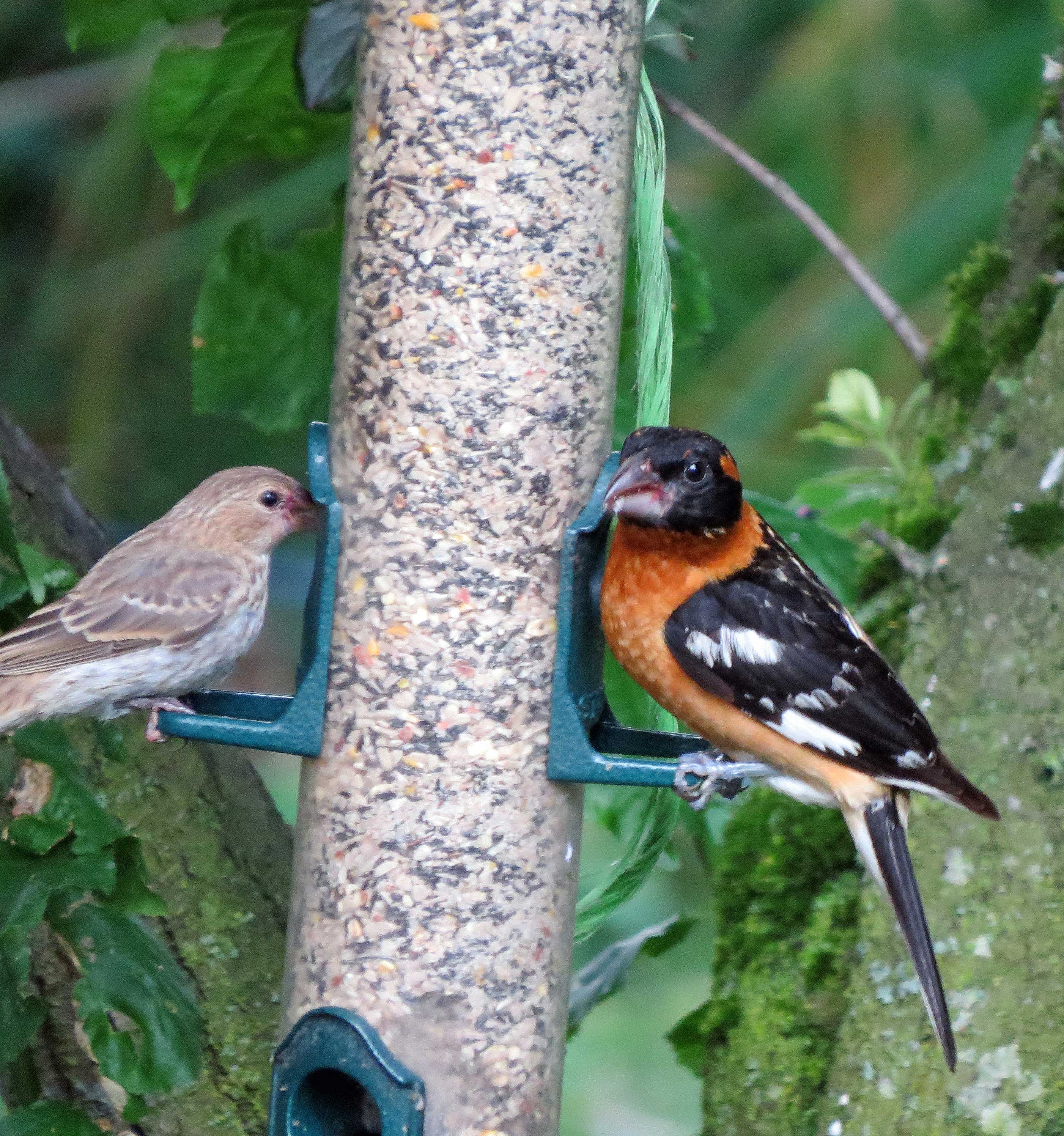
Black-headed grosbeak at a seed feeder

Black-headed grosbeak at a seed feeder

Far away, there are places where people would make a meal of that same seed and sugar water. For the malnourished person, feeding an animal involves a calculation: if I feed this animal, it will become my food, and it will provide me with more nutrition than what I feed it. There is no mystique, no ego, no pride, only practicality.

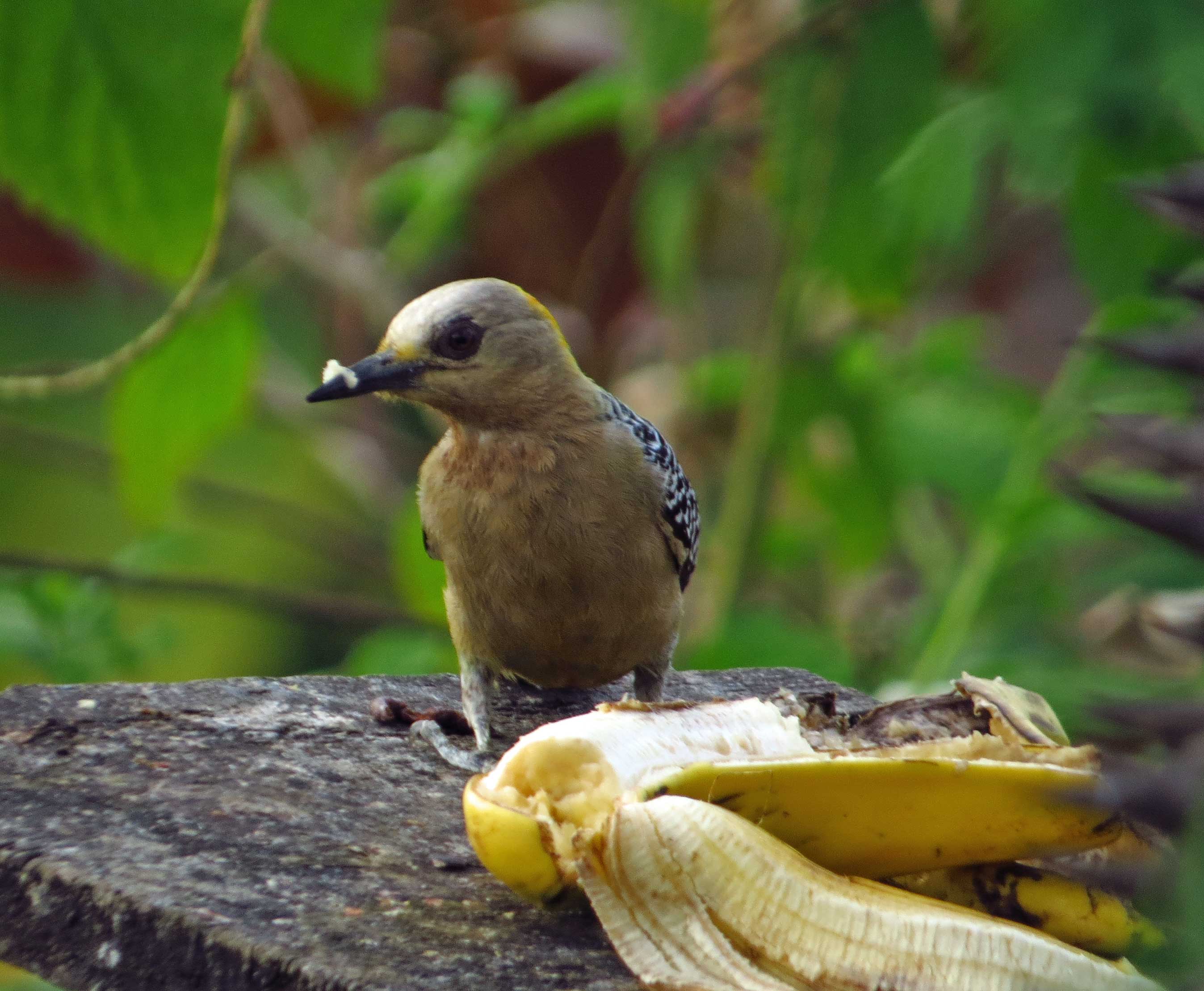
A Hoffman's woodpecker feasts on a banana at a wildlife photography resort in Costa Rica

A Hoffman’s woodpecker feasts on a banana at a wildlife photography resort in Costa Rica

Food is a powerful tool of wildlife habituation. This tool is used by backyard wildlife enthusiasts, hunters, government wildlife managers, and even resorts specializing in wildlife photography. Concentrated sources of food- feeders, salt blocks, hay bales and rich stands of corn and clover- bring the most animals at once. Feeding may be an alternative to certain death: the Washington Department of Fish and Wildlife feeds elk at set locations in the winter to keep them from straying into orchards where bullets will soon follow. Feeders may support backyard wildlife that would starve among sprawling housing developments with manicured yards. Animals tricked into overwintering by climate change may benefit from off-season feed.

However, wildlife habituation to food does not equate to magical bonding, and its costs can’t be subtracted from the human-wildlife equation. Competition for a rich food source can cause injury. Disease can be passed at a feeder like influenza on a crowded train full of coughing people. If there is no shelter from storms or a safe place to den or nest, animals and birds may die or sacrifice the next generation for easy meals. Predation increases: hawks have a distracted crowd of birds to pick from and crows may visit a feeder and then a nearby nest to eat another bird’s eggs.

A flowering lobelia attracts hummingbirds even in a pot

A flowering lobelia attracts hummingbirds even in a pot

The Anna’s hummingbird that does not migrate may die if I stop feeding it, or if the weather returns to historic norms.

Habituating wildlife to a food source can be a problem for people, too. Garbage-conditioned bears in Yellowstone National Park were killed when bear-human conflicts rose after the Park Service suddenly changed policy and closed dumps. Hand-fed ground squirrels and chipmunks at Mt. Rainier steal food and bite people to get a bit of sandwich. Mountain goats charge people because some have let them lick the salty sweat off their arms, or fed them. Backyard feeders attract unintended visitors like rats, raccoons, and opossums: animals we view as pests that view our houses as their homes.

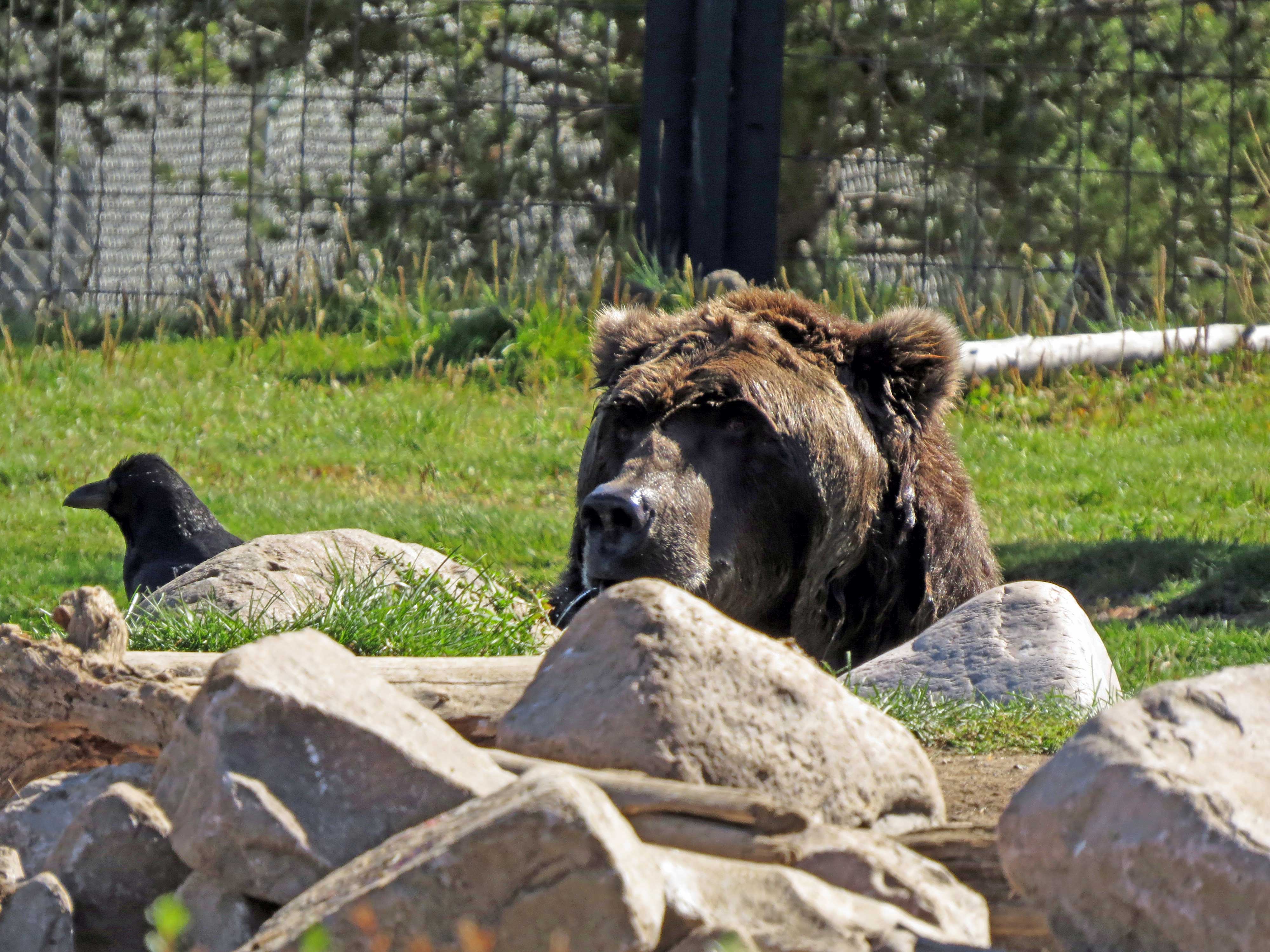
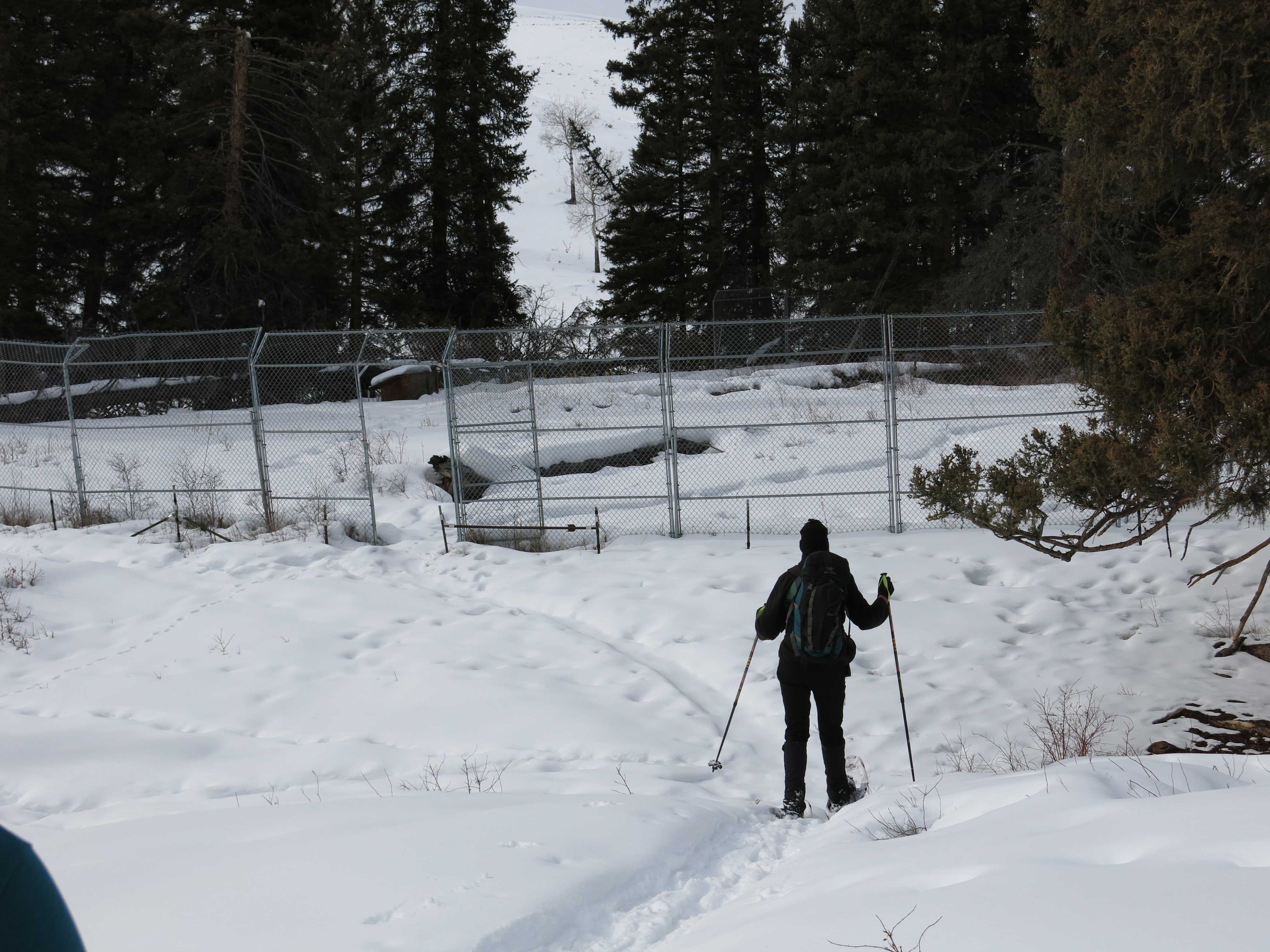
A "bad bear" lives the best life it can inside a fence at the Grizzly and Wolf Discovery Center. He will never return to the wild after habituation to human food, but at least he is alive!

A “bad bear” lives the best life it can inside a fence at the Grizzly and Wolf Discovery Center. He will never return to the wild after habituation to human food, but at least he is alive!

Animals, though they feel more than we can bear to admit, are not human. Maybe the food bank, the food drop, the mission, or the refugee camp is more appropriate for people. We are too many to live in the wild and we don’t really want to live there anymore. Critters, even domesticated, will return to the wild if there is enough food, water, and shelter available. They will eat plants, bugs, slugs and each other happily, with room to avoid each other when necessary and to join together when there is benefit.

We can continue misinterpreting an abundance of animals or birds at a feeding area as a sign of plenty and health. We can pride ourselves on being a backyard St. Francis, a clever artist, an expert shutterbug or a premier hunter when we are just exploiting the tendency of resource-limited creatures to migrate to an easy meal. We can allow wild lands to be developed or fragmented to the point that they become empty and lifeless.

This young mule deer and its sibling stayed for a week, eating grass and wild shrubs that are adapted to browsing.

This young mule deer and its sibling stayed for a week, eating grass and wild shrubs that are adapted to browsing.

Alternatively, maybe we should stop destroying habitat. Maybe we should prize great tracking skills, the glimpse of an animal in nature, the patience to wait for a great picture or clean shot. If we want to capture wildlife in artwork and photographs, perhaps we should develop the skills and persistence to find them in the wild. If we want to hunt, maybe we should abandon the bait block, the crop stand and critter cam and learn to identify habitat, to track and to aim well. If we just want to enjoy wildlife around our homes, maybe we need to plant gardens, woodlands, hedgerows and wetlands for local and migratory wildlife.

A butterfly sitting on my pack as I ate lunch wasn't a supernatural message.  The insect was warming up on heat absorbing dark fabric on a chilly day, and likely taking up mineral from sweat.

A butterfly sitting on my pack as I ate lunch wasn’t a supernatural message. The insect was warming up on heat absorbing dark fabric on a chilly day, and likely taking up mineral from sweat.

For now, I will continue hanging nectar feeders for the Anna’s hummingbird that should have departed to Mexico for the winter, but perhaps hung on because the non-native bee balm flowered until the frosts arrived. I may have been his downfall, his fall deceit, so I will feed him this winter. But I will not pretend that his charming insistence on stopping me in my tracks means anything more than a demand for the debt of calories I now owe.

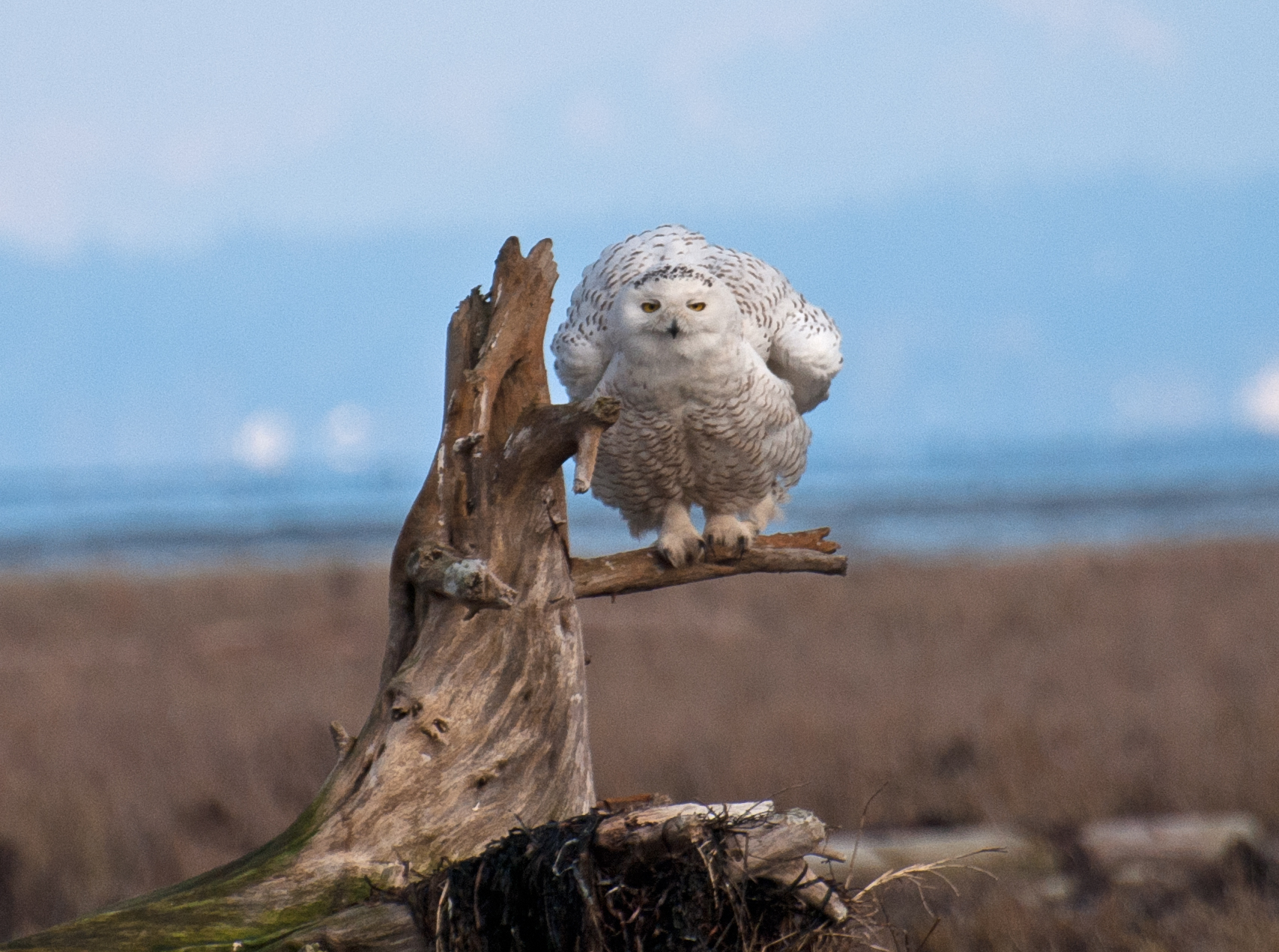
A snowy owl unwilling to become habituated during a rare wintertime visit to Boundary Bay, Delta, B.C.

A snowy owl unwilling to become habituated during a rare wintertime visit to Boundary Bay, Delta, B.C.

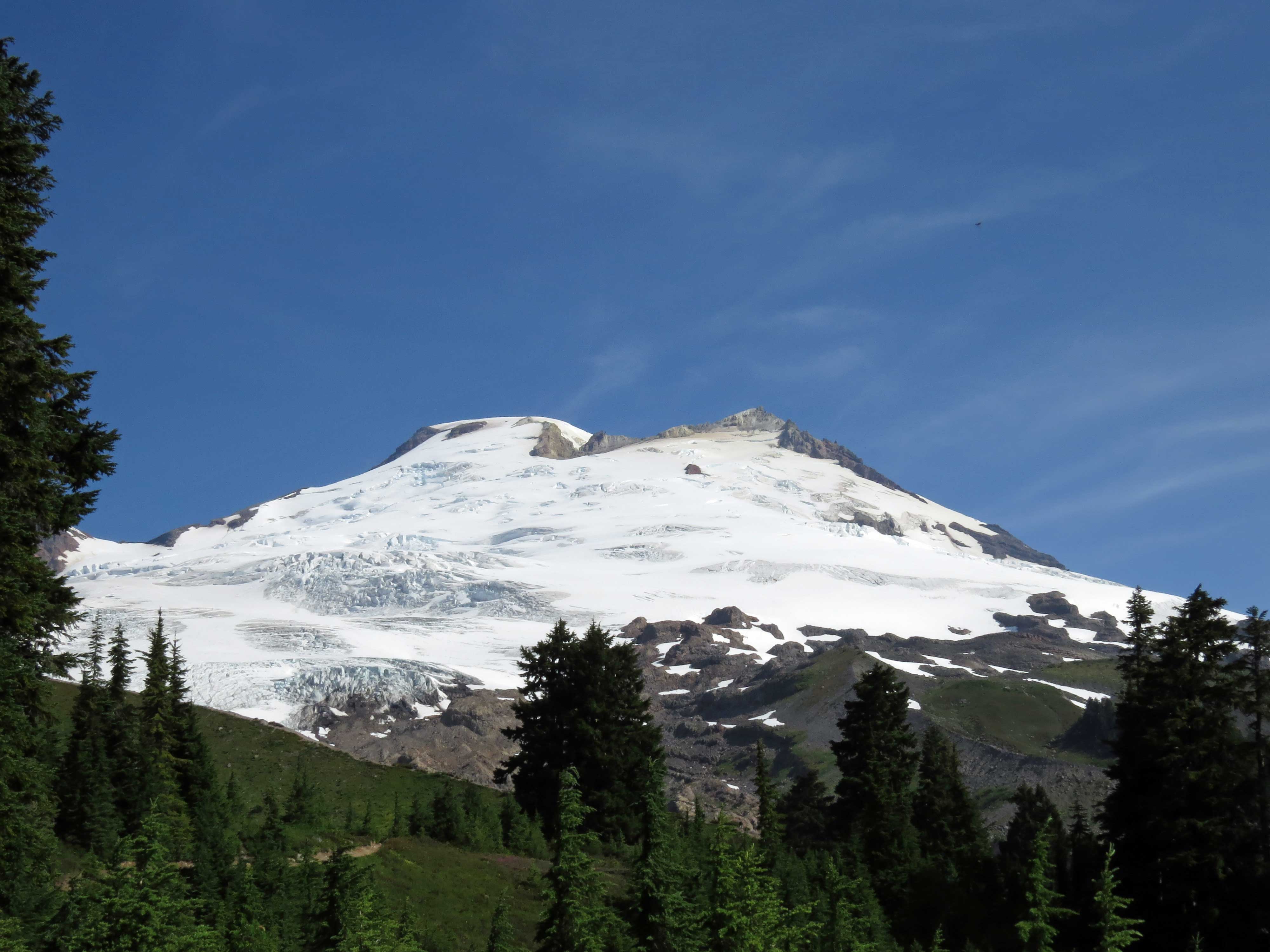
View of Mt. Baker from camp

View of Mt. Baker from camp

Besides working like a dog and finalizing my Certified Interpretive Trainer and Envision certifications,  I am trying to get back to wilderness fitness so I can go to Baffin Island next year and backpack the Arctic Circle for 3 weeks, maybe seeing a polar bear before they all expire.  I packed into the Park Butte/Railroad Grade trail in the Mt. Baker area to spend the night under a full harvest moon.  The road to the trailhead is excellent, unusual for our area, and I arrived early enough to get a decent parking spot. I was intending to head for Mazama Park, but a sign at the trailhead indicated it wasn’t available for camping due to a youth group.  I signed up for Cathedral Camp on my pass, not sure what I would find.

It’s not terribly far to get to a campsite, but the trail gets steep in one section.  In this area, I ran into two groups of young guys in camo with firearms, learning later they had arrived for the high country bear hunt.  The first group said they found a spot on Railroad Grade and thought there was at least a site or two open.  I figured I would try that first, and go on to Cathedral if nothing worked.

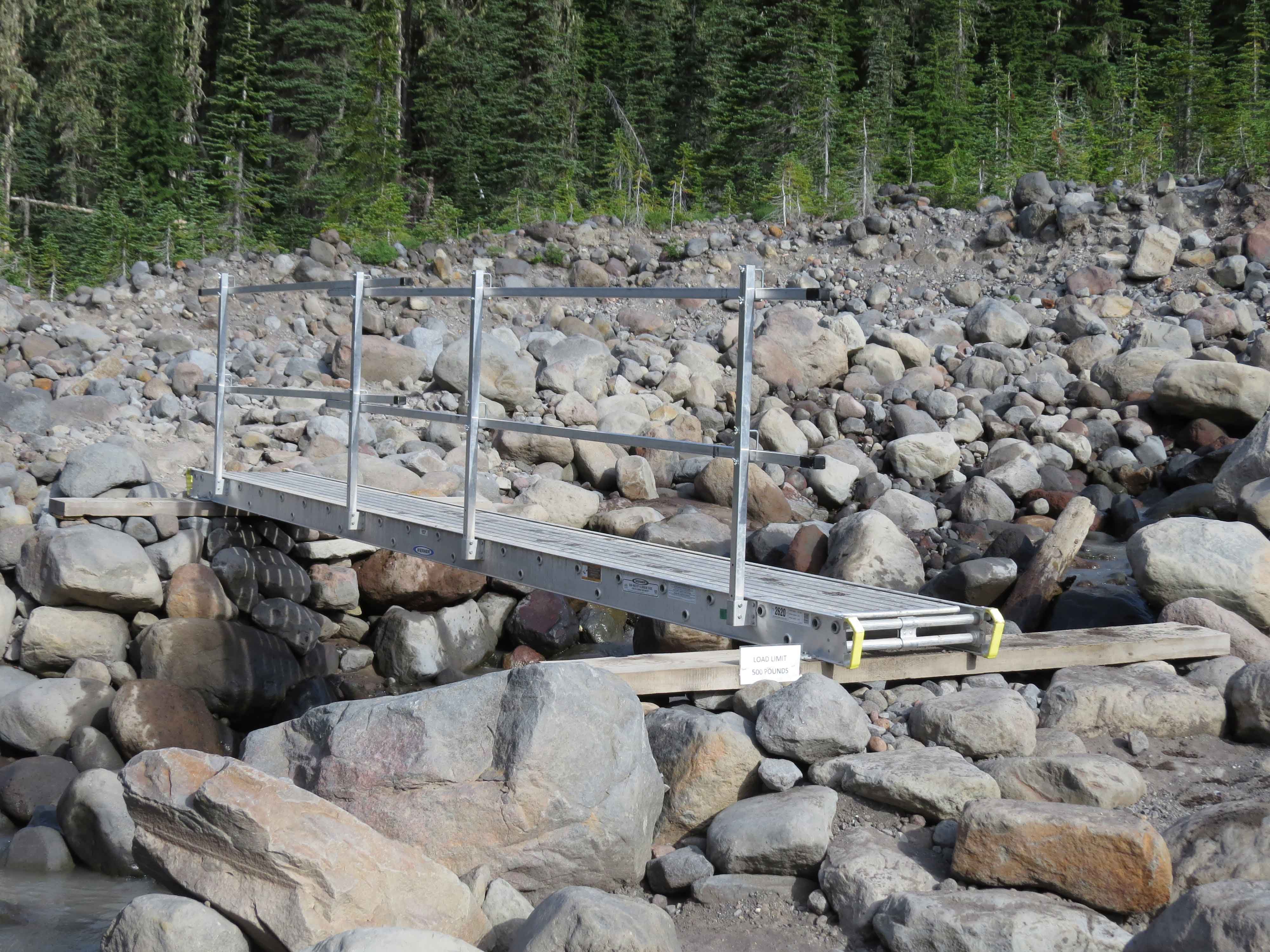
Awesome idea for a seasonal bridge where they wash out constantly

Awesome idea for a seasonal bridge where they wash out constantly

I grabbed the first site on the Grade, a great camping platform under some lovely mountain hemlock trees with a great view of the mountain.  The only better site I found in the area was the one closest to the moraine trail, a similar platform but with an even better view.  Since it was warm and dry, and unlike most of Washington, almost bug-free, so I brought my little lightweight Marmot Starlight shelter (more a glorified bivouac bag than tent).

My lovely little campsite

My lovely little campsite

The camp was above a lovely meadow and stream for water, with vibrant pink heather and pretty purple lupine in bloom.  The lack of bugs was a blessing at this time in the Cascades, as was relative relief from smoke of the raging wildfires scorching Washington.

I hiked the first day to the Climber’s Camp along Railroad Grade.  There are high country camps here, lovely but less private than my modest camp.  I’ve climbed Baker 18 years ago by this route.  I liked the Coleman route better since it was less crowded.  This route has a reputation for crowds, but it was not bad early on as I walked uphill.  A climbing couple passed me, and two women with packs.

Backpackers headed for the high camps

Backpackers headed for the high camps

I walked the very narrow trail on the eroded lateral moraine that embraced a once-mighty glacier. It’s stunning how far the glacier has receded, leaving the cavernous moraine to crumble into the void. The trail leads to “Sandy Camp” where a group of youth hosted by North Cascades Institute were spending the weekend.  Some had never been to wilderness before, nor ever camped.  They were having a superb time, skimming the snowfields and studying the world.

I chatted with two rangers, Julie and Vilay, who were going to give the youth group a talk.  Vilay was enjoying a break from her deployment as a fire ranger in the wildfire plagued areas of Eastern Washington.  She said the air quality was better here, and her cough was going away.  She had never backpacked before- but it was growing on her.  They were dividing their time between the youth group putting in the pit toilet in Mazama Park, and the group at Climber’s Camp.

I took shelter in the lee of a rock, since the wind sweeping off the glaciers was quite cold on an 80 degree day in the mountains, and took pictures of crevasses in the Easton Glacier.

This is late in the season, when crevasses are usually visible, but higher up, I could see a light snow layer over the surface.   I noticed that a group that seemed to be guided (in identical tents, and herded like cattle) climbed in the evening.  I wondered if they avoiding icy conditions that can become a sliding hazard if a climber slips.  Even skilled climbers have lost footing on August ice and careened down a slick glacier surface to their deaths.


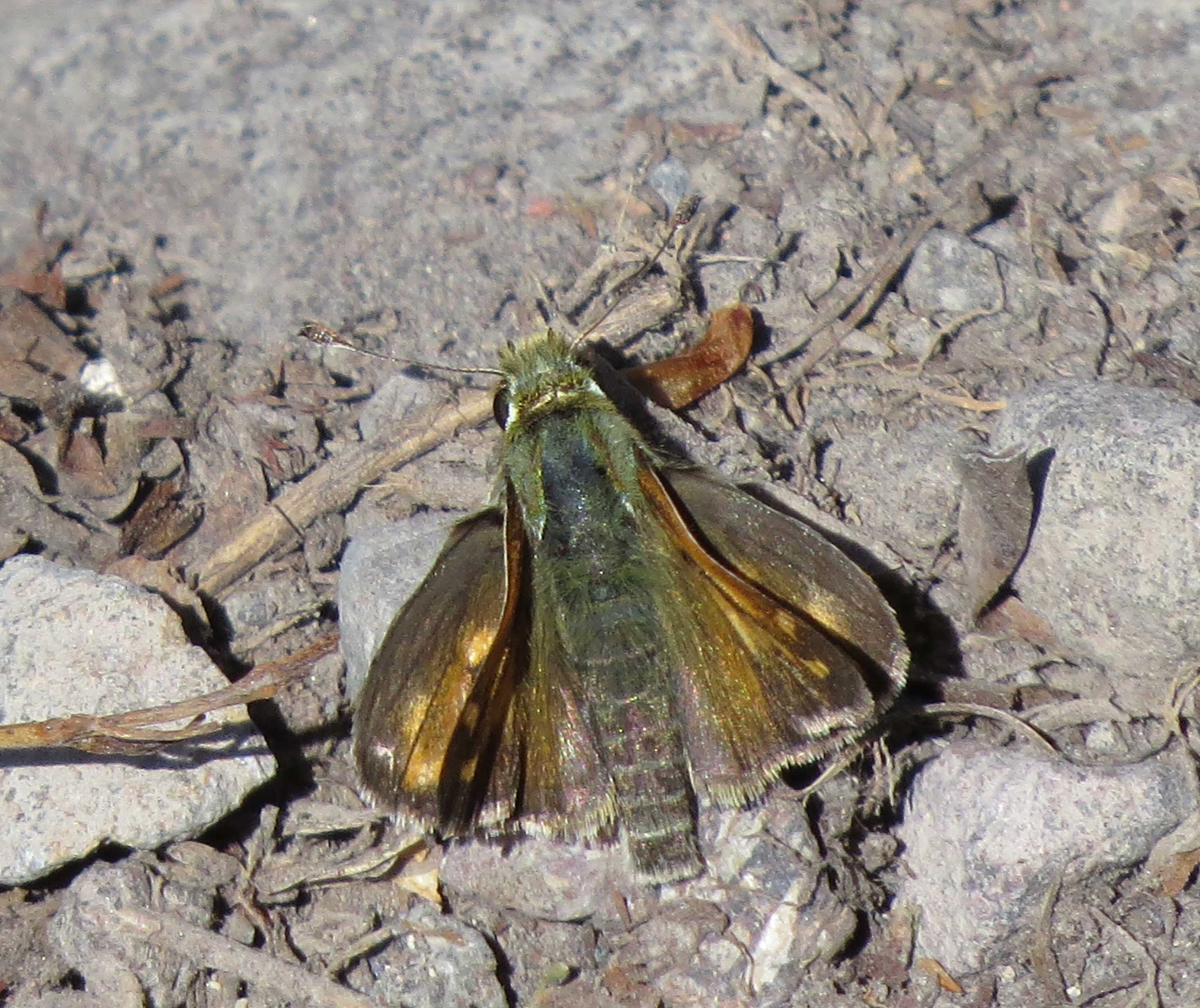
Juba Skipper, first time I've seen one

Juba Skipper, first time I’ve seen one

Fritillary- maybe Arctic female, not sure

Fritillary- maybe Arctic female, not sure

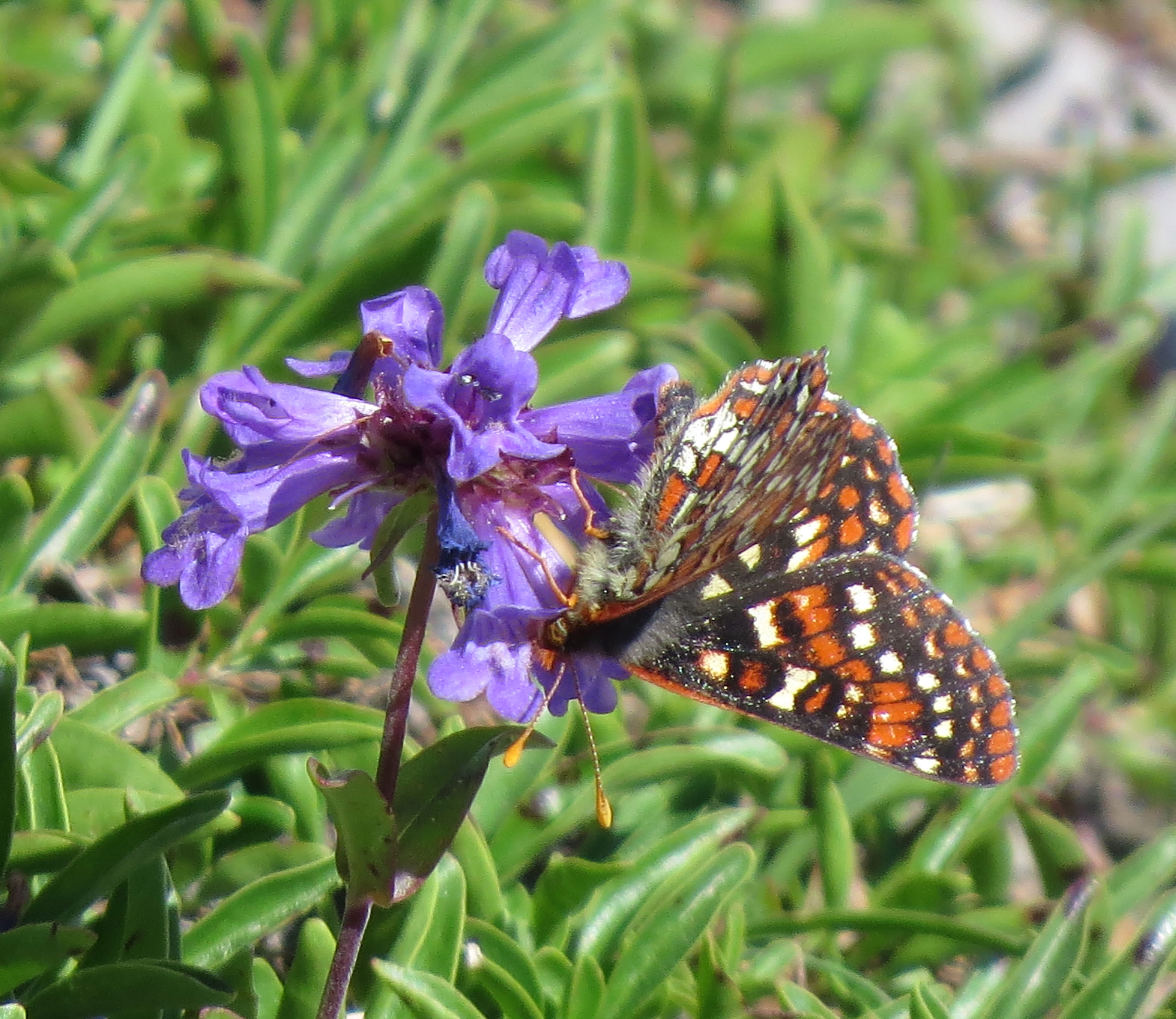
Checkerspot on penstemon

Checkerspot on penstemon

What was most interesting to me, now that I’ve become older and distinctly batty, were the butterflies fiercely defending their patch of greenery and trying to complete a life cycle in the short alpine summer. At one point, I saw clouds of checkerspots rising in a tornado against an invading Western white.

And there were marmots- now dwindling in number, but according to Julie the Ranger, who does surveys, stable in this area at 46.  It’s hot for them, and I see a mother chillin’ on the snow, sprawled out while her baby tried to get her to come feed or nap in the den.  People are up here with dogs, and hopefully keeping them in check.  Julie says that marmots are suffering on the busy Skyline Divide Trail, possibly because of disturbance.  Later, I hear some kids whistling at them, and then passing the “trail closed” sign into marmot territory, which gets them calling.  Come on, folks- teach your kids better manners.  If they’re picking on animals at this age, they’ll be torturing people later on.

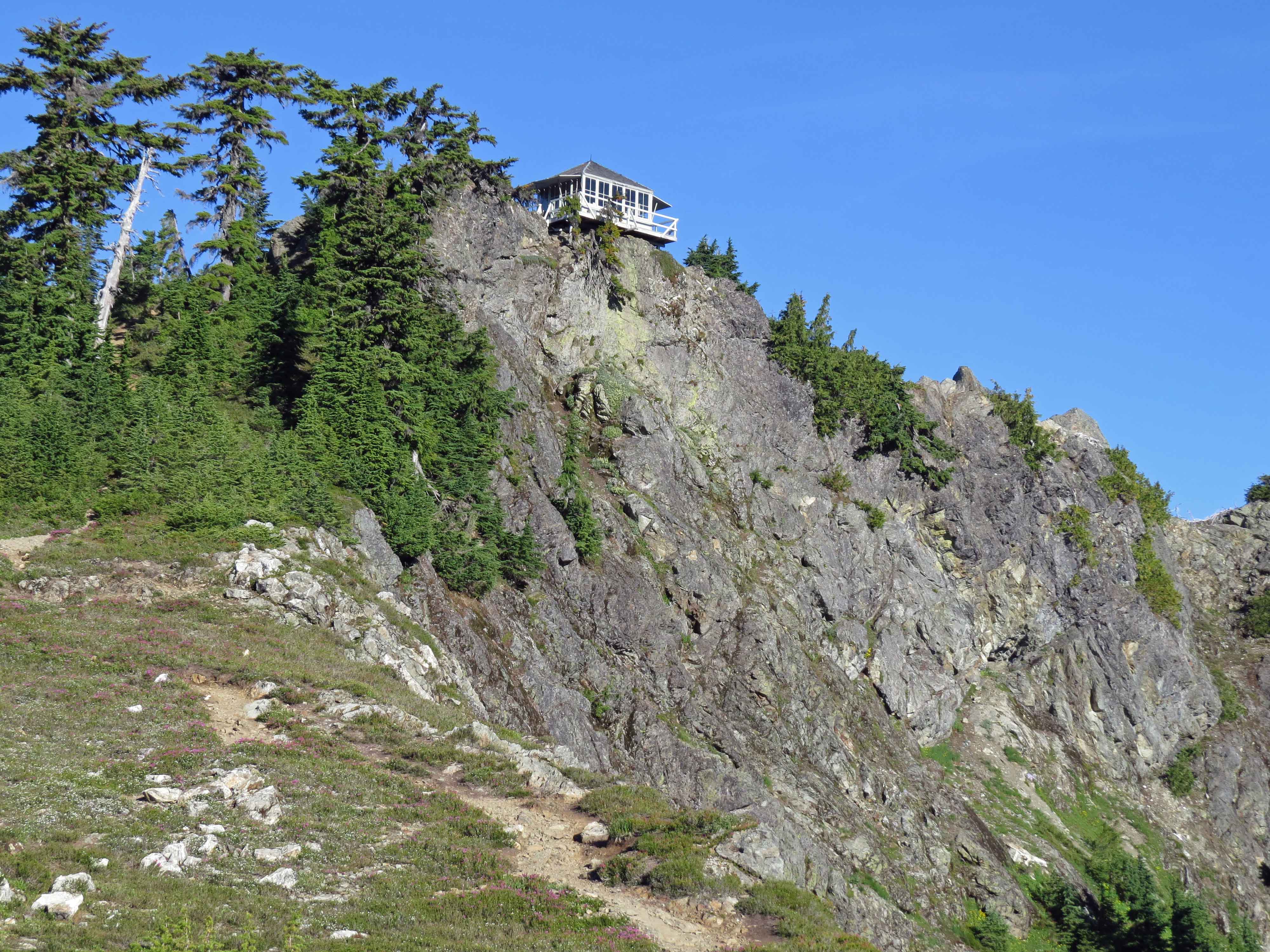
The night was lovely, with moonlight bathing the mountain and meadows and all of us sleeping beneath it.  I woke at one point to tremendous rock or ice fall, sounding like thunder in the night.  It happened twice in short order, suggesting maybe a serac went tumbling and took a buddy with it. A couple folks I talked to the next day said the sound woke them, too, and they thought there might even be an earthquake.The next morning I left my camp set up and hiked to the Park Butte fire lookout.  The morning light illuminated fields of pink heather still in bloom.  The trail winds up a rock garden and past two tarns, then winds around a bluff and approaches the lookout on a ledge.

Marmot announcing my presence

Marmot announcing my presence

Marmots chillin' on a hot day

Marmots chillin’ on a hot day. 

View from Park Butte Lookout

View from Park Butte Lookout

Heather meadows as the sun comes up

Heather meadows as the sun comes up

Trail to Park Butte lookout

Trail to Park Butte lookout

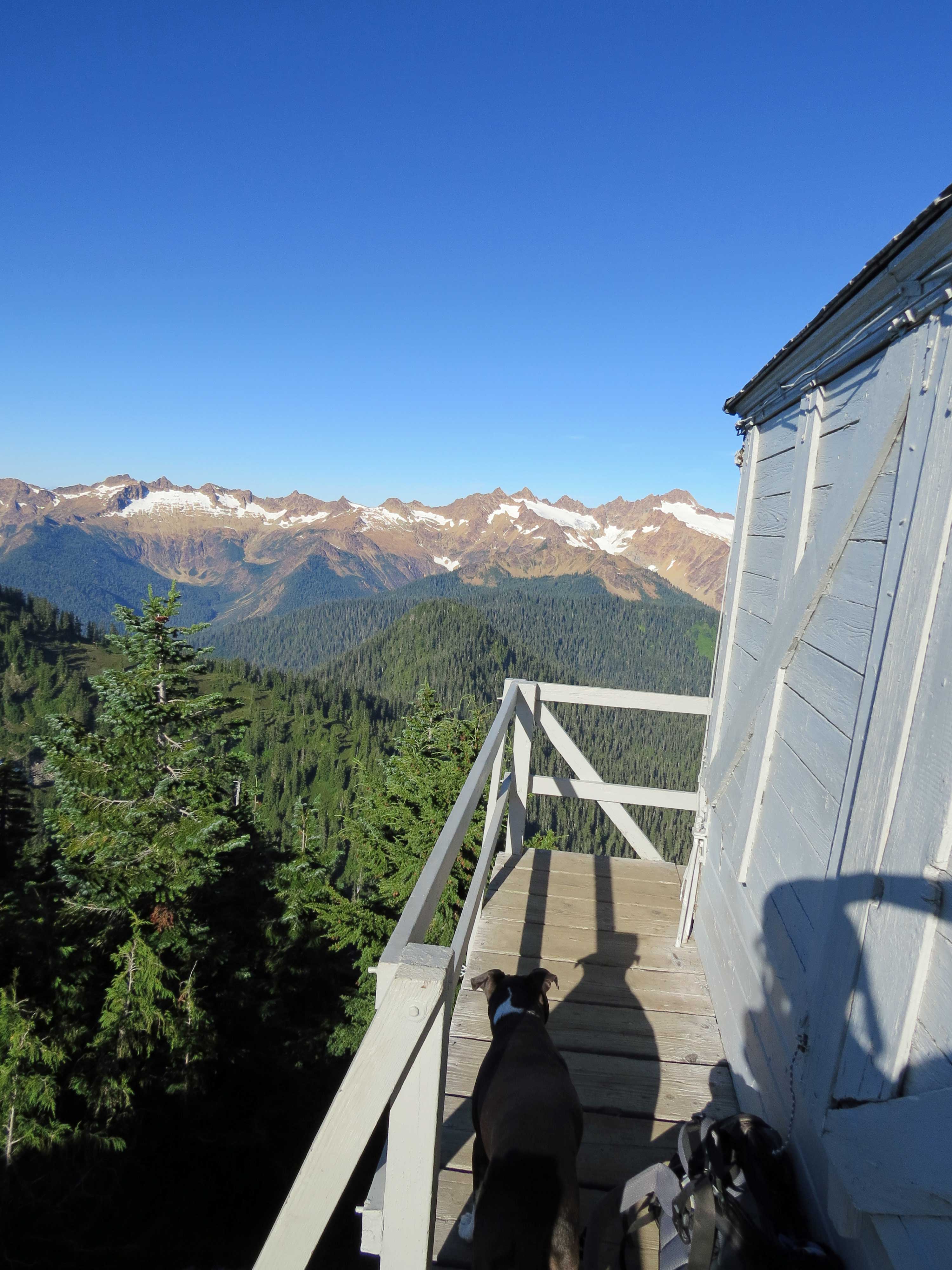
Bear, not being able to open her eyes to the vertiginous view

Bear, not being able to open her eyes to the vertiginous view

At the lookout, I met a dog- probably a Staffordshire bull terrier- named Bear.  Bear was an older dog who couldn’t bear to look at the dizzying view, and would stand on the stairs, or preferably my feet, with her eyes closed to feel secure.  Bear was lucky she was a dog when the two groups of hunters on the high country black bear hunt had passed the day before.  The nice young men were all dressed in Cabelas best- camo from head to foot and guns carried in safety position. They actually missed the black bear that the lookout overnighters and several campers saw.  All the campers were happy that the bear lived to see another day.

On the way down, I followed the nice young women I met the day before, cousins.  One worked for North Cascades Institute, the other was a piano repairwoman.  They were typical of the great young gals I meet now in the backcountry: free-spirited, happy,but and independent, loving the outdoors and their lives.  It gives my heart a lift to see this change- there is a light of hope for us women after all, and we are that light.


Tree beards, not Tree Beard- but by the full moon, who knows?

Tree beards, not Tree Beard- but by the full moon, who knows?

Admiral in the wet meadows on the lookout trail

Admiral in the wet meadows on the lookout trail

Summit of Mt. Sheridan, Heart Lake below

Summit of Mt. Sheridan, Heart Lake below

This was the trip I tried to do last year with my friend Brenda when she became injured. This year, I was fortunate to have the company of Michelle, a new friend from the National Association of Interpretation training I attended.  Michelle’s easy-going partner Jamie couldn’t make it due to work, unfortunately for him as he would have enjoyed the fly-fishing.

I did what is becoming a routine:  drove to Montana to decompress on the road, stopping overnight at the Motel 6 in Missoula, and then heading to Yellowstone the next day.  That drive appeals to the Midwestern road-tripper in me, and lets me unwind from work, which is crazy right now. The big scenery spins by the windshield and I daydream and listen to music cruising along Interstate 90, eventually leaving the to-do list and worries behind.  Why the Motel 6?  Dunno, started out there, and it’s become a habit.  I learned this time that the 3rd floor smells a lot like cigarette smoke (1st floor doesn’t), but I sleep well anyway.

Montana experienced an unusually rainy August and September, creating lovely color along the drive.  There were black-eyed Susan flowers blooming on the roadside, and the hills were green-gold instead of the rich yellow I saw the last couple autumns. Aside from a little haze coming from Washington’s wildfires, the sky is clear this time.

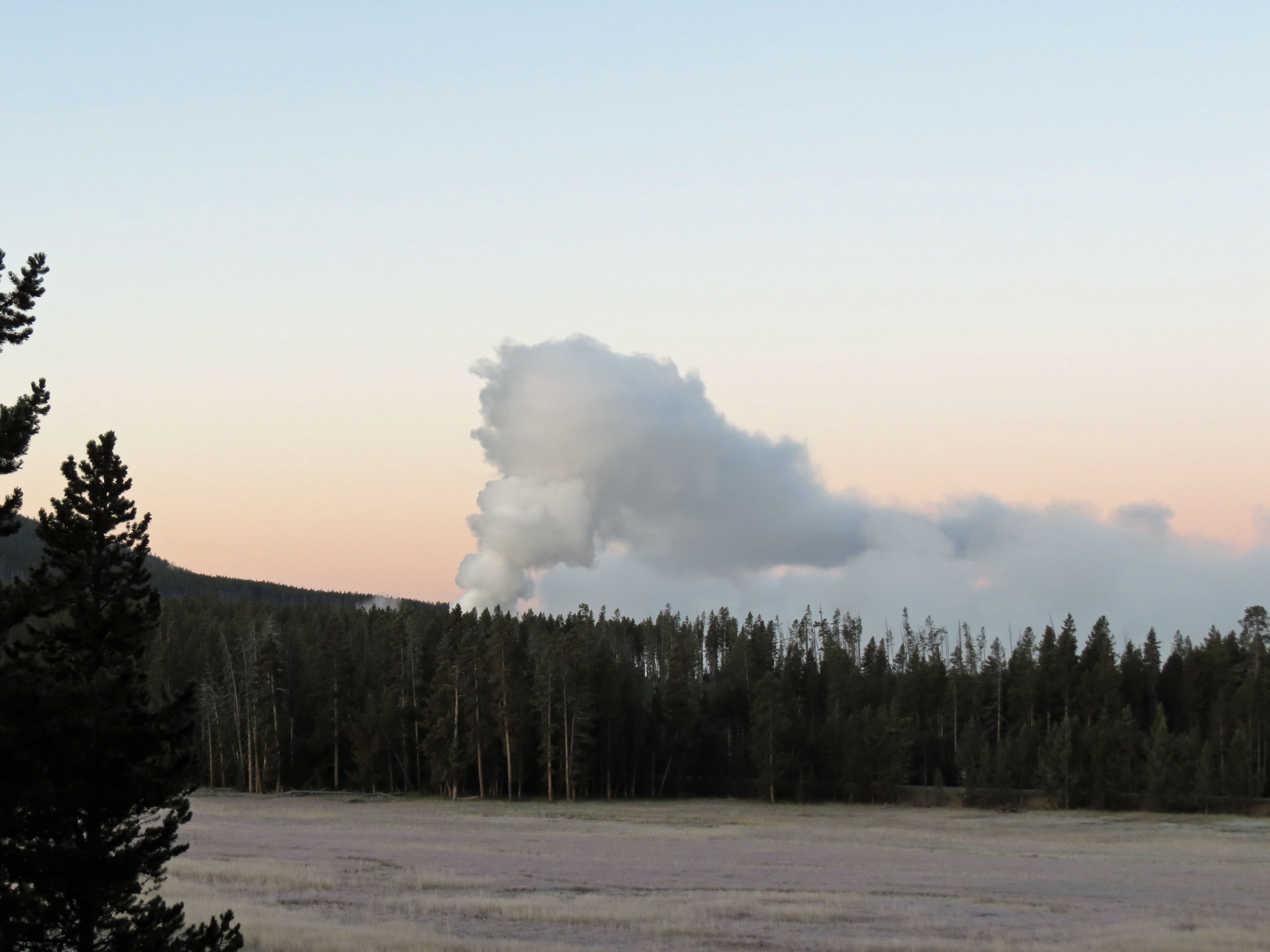
I arrived to an unusually busy fall crowd, rushing into the closest campground, Norris, just before it filled.  This turned out to be a good choice, since Steamboat Geyser in the Norris Geyser Basin erupted the day before for the first time in years and was marked by a towering plume typical of the steam phase that lasts 24-48 hours after an eruption.

Steamboat Geyser, about 30 hours after eruption

Steamboat Geyser, about 30 hours after eruption

Norris Campground is by a historic ranger station that is still beautiful in its creative and sturdy construction, with a trail leading to the Norris Geyser Basin.  It also has a great staging area for talks, and the night’s heavily attended ranger presentation was on the night sky.  The growing moon made it difficult to see stars, but it is the first time I understood anything about them from the stories the ranger told.  She brought a laptop and volunteers brought telescopes, through which you could see the rings of Saturn and craters of the moon.  My little Canon didn’t do too badly photographing the moon, either.

The beautiful moon

The beautiful moon

It was a cold night, registering about 24 degrees, but I was prepared and slept well in my reliable old North Face tent, which has accompanied me on adventures for 20 years.  The next morning, I met up with Michelle in West Yellowstone and we headed for Grant Village to pick up permits, day hike, and camp one more night before heading out.  I’m a sea level gal, and Yellowstone is at altitude, so this acclimation period is necessary before shouldering a heavy pack and heading uphill.

We traveled to Pelican Valley, lovely but notorious for a rare, unprovoked fatal attack on a lone woman camper in 1986 by a grizzly bear that was never found.  Camping is no longer allowed in the valley, and people are supposed to enter only after 9 a.m. and leave before dusk.  We saw a lone hiker, the seasonal employee that often becomes the victim of bear attacks by traveling alone, or sometimes, as we saw later, the lost hiker separated from a group of other inexperienced seasonal employees.As if to make a point, a grizzly left a pile of scat at the trailhead, full of elk hair.  A track followed not much further.  Wolf tracks also appeared, suggesting the wolves might have taken down the elk, and a grizz took the carcass over, as they will do.  We also found scratches on trees from grizzlies marking, or perhaps trying to beat up the trees, as they will sometimes do in frustration when they are disrespected by a bigger bear.

Pelican Valley

Pelican Valley

Michelle said Pelican Valley was once the last holdout for the 25 remaining bison of 65 million that once roamed the U.S.   Those 25 were brought to Lamar Buffalo Ranch to become the herd of 4000+ that exist today.  If the bison had more room to roam, there would be many more than 4000; currently, culling is used to control numbers. Pelican Valley is perfect for wildlife, with water, grasslands, and trees for shade and hiding predators.

The next morning we headed out on the Heart Lake Trail.  We had divided food and common supplies, with Michelle bringing real food for lunches and dinners.  I got a great education on backcountry cooking, which I stink at, relying on freeze-dried and instant food that inevitably makes me lose my appetite when I really need to be eating.  We reached Paycheck Pass below Factory Hill and stopped for snacks, Michelle’s application of blister treatment and geyser investigation.  Heart Lake was visible in the distance, but still 2 miles off, with our first campsite another mile further.

The Heart Lake area was subject to the historic 1988 wildfires and several since, with the mosaic burn pattern typical of these fires.  Why some trees live and others burn is dependent on microconditions in the burn area.  Since wildfires are nowhere to be when they are burning, only distant detection methods help to figure out wind speed, air temperature and moisture, and ground heat.  The fire snags can be quite lovely in the right light, gleaming silver like a valuable statue rather than a long-dead trees.

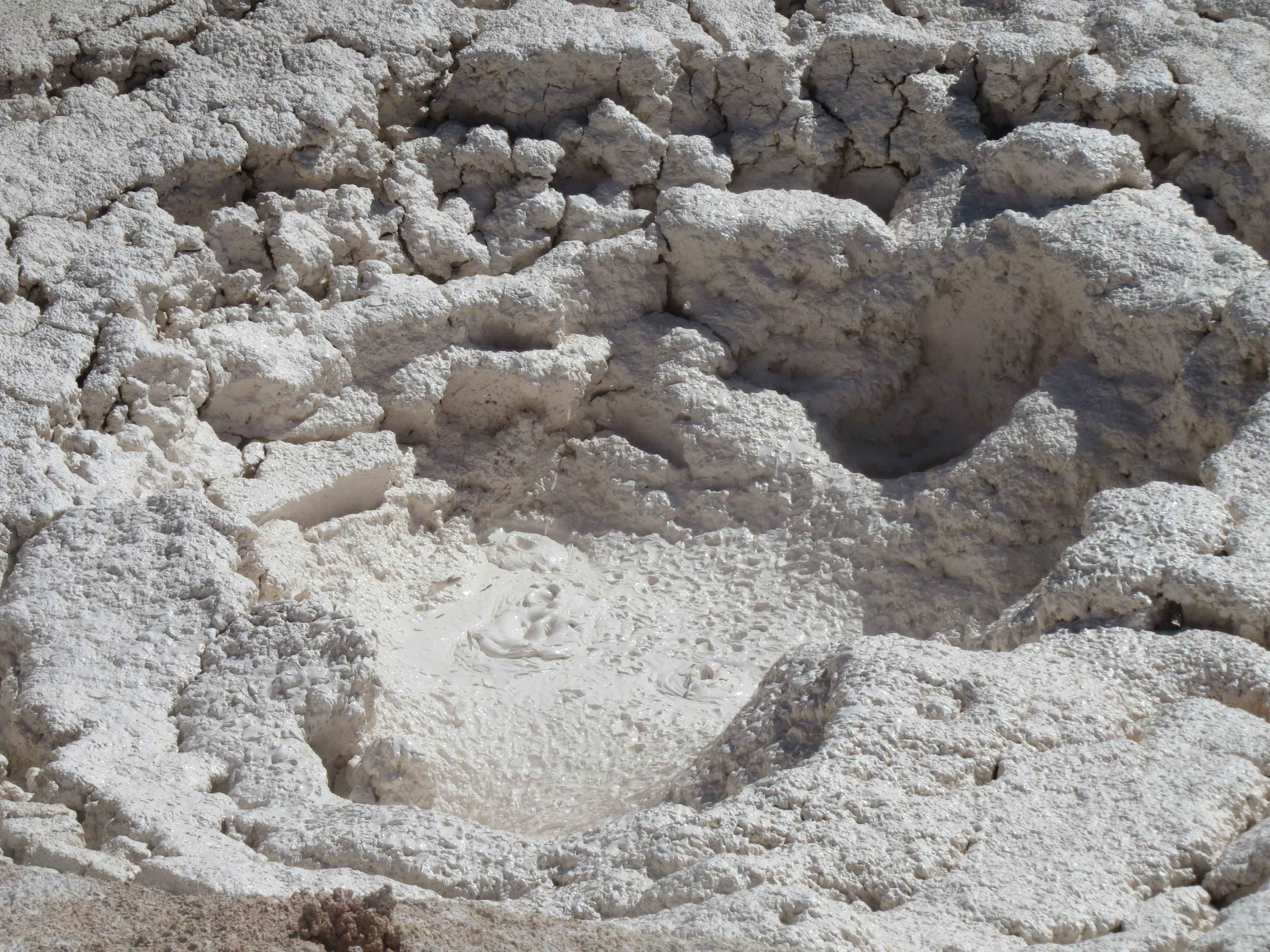
Mud pot, Paycheck Pass

Mud pot, Paycheck Pass

The geyser basin at Paycheck Pass includes a mudpot, a superheated soup of dirt and mineral that bubbles and pops thick muddy bubbles.  These are the most entertaining thermal features to me, with no spectacular explosions of water, but a constant burbling chatter only they can understand.  It sounds like some sort of gnome lives within them, stirring the pot and grumbling.

Even though you can see Heart Lake from the pass, it’s still 2 miles, and then for us, another mile and change to campsite 8H3.  We were happy to be in camp, setting up for the first night.  Michelle scouts a tent site in the grass because the established tent sites are all really close to the bear pole, a typical set up by the Park Service even though they want you 100 yards downwind of your food.  Michelle cooked pasta for dinner and we retired early, with a big moon rising and a sound of distant elk bugling.

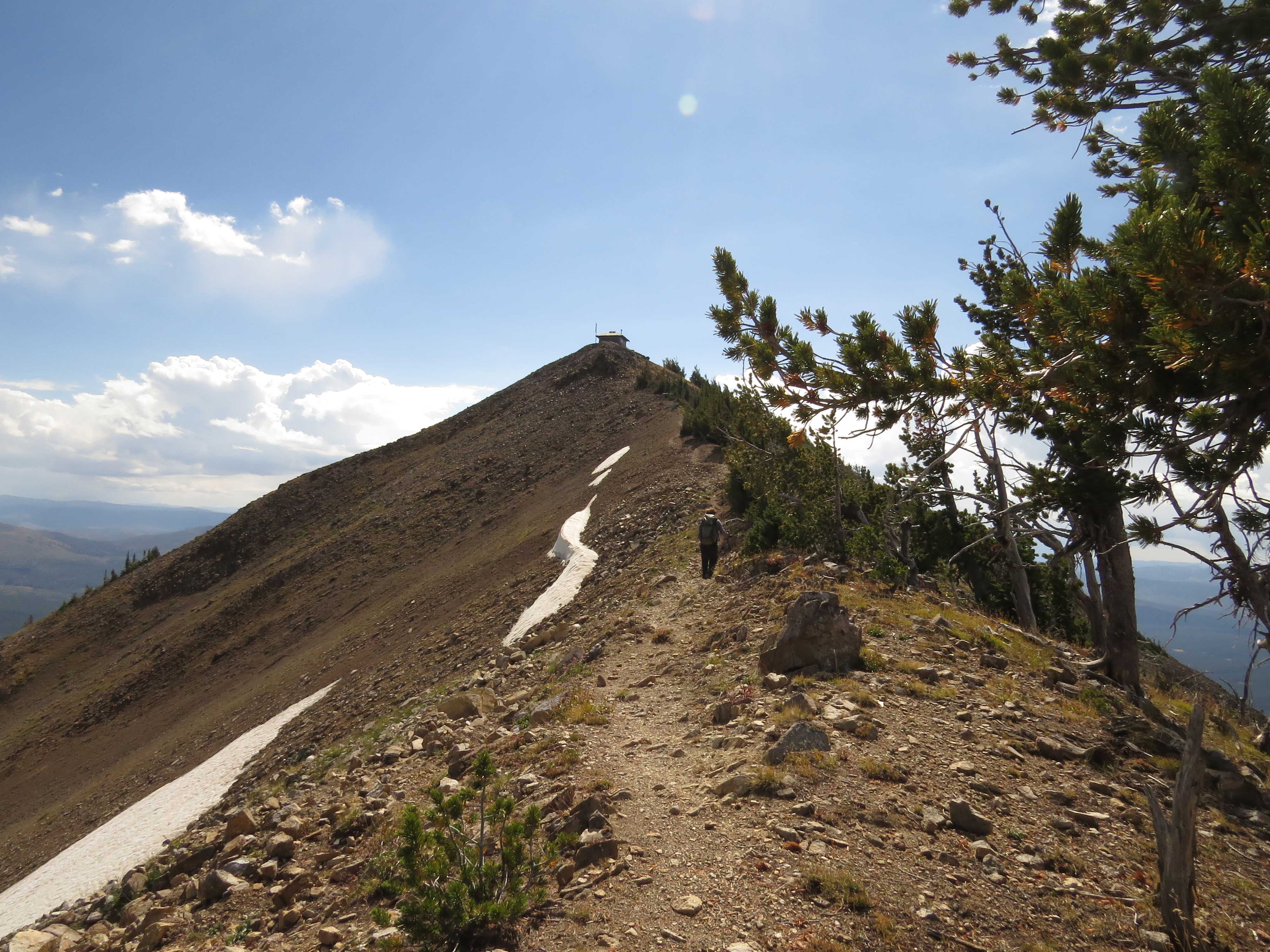
The next morning we set out to summit Mt. Sheridan, about 3.9 miles and 3000 feet gain, to top out at 10,300 feet or thereabouts.  The trail is really nice, good footing even when it’s steep, despite the bad rap it gets from my guidebook.  It travels through an old burn, where we hear branches snapping, then silence as we listen.  Later, we learn another party has spied a grizzly on the slopes of Sheridan, and at the end, rangers tell us the bear is a fixture there.  No worries for us: it is a good huckleberry season.  The weather is cool and windy, which saves us on the ascent.  The trail finally winds around the back of the shoulder through lovely alpine meadows, and then makes the final climb to the summit and lookout.

Trail to summit of Mt. Sheridan

Trail to summit of Mt. Sheridan

The slopes going around the lookout appear barren from a distance, but we see lovely rock gardens full of flowers.  We find no one at the summit and have a great lunch of burritos and fruit and nuts, taking pictures of the huge view, our route around Heart Lake, and the flowers.  There is even a picnic bench on the summit.  Mt. Sheridan marks the south end of the Yellowstone volcano caldera, and Mt. Washburn, visible from here, marks the north.  We can see Yellowstone Lake, which has volcanic features under the water, and Shoshone and Lewis Lakes as well.  Grand Teton and its companions are in view but obscured by the weather they are kicking our way.  I learn that the Teton Range whips us a lot of storms with heavy lightning, explaining what Brenda and I experienced last year.  The weather spins our way, but we don’t get overtaken during our break on the summit.

We descend and suddenly run into three groups.  The first, in very trendy trail clothes, tells us they saw the grizz.  “Awesome!” I say.  “Michelle heard a stick snap- must have been him.”  The lead guy says, “Well, be careful.  There’s eight of us,” as if to imply that the bear is back there counting heads and will leap out to eat us because we’re a party of two.  We run into a party of two, but since the older gentleman looks distinctly unhappy with the elevation or strenuousness, I don’t want to add to his troubles with talk of a grizz.

The day heated up as we ascended, so we shed clothes.  We’decided to stop at the geyser basin, which I need to do to wrap a blister.  At the geyser basin, we hang out and wait for Rustic Geyser to erupt, which happens about every 20 minutes, and take pictures of the lovely blue geyser pool nearby, where a boneyard eerily decorates the sediments under the superheated water. An elk or moose appears to have fallen in, perhaps being chased, or just starving or ill. Rustic is really a fun geyser to watch.  The water rises and recedes ominously a few times, and then, on a recession, suddenly it bursts in big, successive burps of steam and water before abruptly stopping again.  Later, Michelle reads that the odd shape was created by Native Americans, who squared it up with logs around the rim; the logs are now covered in sinter. Interestingly, the plumbing for Rustic geyser and an adjacent geyser must be connected, because this more modest feature starts to bubble and burp and overflow after Rustic erupts.  This is common, and in fact, when we visited Steamboat Geyser to see the steam phase before we went on our hike, Cistern Geyser was empty, as will occur when Steamboat erupts. No one understands the Yellowstone geysers well; Michelle says only Old Faithful has been subjected to video in vents in between eruptions.

The ground around these geysers can be very dangerous, and you have to pick your way through, checking for soft spots and cavities to make sure you’re not going to plunge into a superheated pool and scald your feet.  It happens. I don’t want to be the next to fall in a lovely but deadly pool, so I’m careful.

Remains of victim, Heart Lake Geyser Basin

Remains of victim, Heart Lake Geyser Basin

We hobble back to camp for a good night’s sleep and get ready to hike to Basin Lake the next day.  The night is cold, in the 20’s. but the sun comes up and warms the next morning with beautiful light.  We take pictures, filter water, pack up, and head out around the lake.  Just as we enter the forest, there are a marmot eating berries and a pika nearby, harvesting hay.  We find scratches way up a tree- not the climbing type, but the very-tall-bear type.

I backpack the next couple days in my Keen sandals to give my blister a chance to heal, which works marvelously.  Michelle ditches her new insoles, since they have helped create her blister, and does fine.

Grizzly track, Snake River, where there was day-old scat and a day bed

Grizzly track, Snake River, where there was day-old scat and a day bed

The trail travels through nice shady forest and then breaks out in some big grassy flats and wetlands.  We have a little trouble finding the turn to Basin Lake, since there is no sign, but a wide, pummeled trail going the opposite direction to an outfitter camp full of horse crap.  We double back and then find our camp.  The camp at Basin Lake is really our best, with space to spread out, no rampant outfitter signs, and peace.  In the morning, I see a pine marten, and we hear the echoing calls of sandhill cranes as they do practice laps in preparation for their winter migration.

Our next couple days are also marked by birds- a pair of sandhill cranes in every basin we pass, grouse blowing out of the grass unexpectedly, sapsuckers hammering holes in trees, and red-tailed hawks. Flocks of robins hang around patches of huckleberries, perched in fire-killed trees, looking fat and content.

Sandhill crane stalking food, trail to Basin Creek Lake

Sandhill crane stalking food, trail to Basin Creek Lake

The river fords are cold, but Michelle is able to fish at our next crossing of the Snake River, and even gives me fly fishing lessons.  I do not of course catch a thing, but get a feel for how different the cast is from the mighty salmon cast I use to fish on my river.  During the trip, she catches (and releases) five fish- two native cutthroat, a rainbow, a brown trout, and a cutbow (rainbow/cutthroat hybrid).

We reluctantly leave and hike on a cold morning to our next camp at the outlet of Heart Lake.  The weather is turning, and Michelle does her usual routine of cleaning up a bad fire ring while I help gather kindling.  In Washington, I just don’t start fires, what with the scarcity of wood in the alpine areas and the fire danger.  It’s low fire danger here, and the burn areas provide an abundance of firewood without compromising the environment.  At night, we hear elk bugling, one quite close to our camp. We expect it to snow that night, but it waits until we hike out, a long day of 12 miles.  We stop at the Heart Lake Ranger station on the way out and eat a snack sheltered from the increasingly cold wind.  Snowflakes start falling, then become thicker. Michelle does the right thing and stops us at Paycheck Pass to eat hot quesadillas in the snow before we continue the slog out to the parking area. We’re actually stopped by two rangers on the way out, one an enforcement ranger, and asked to show our camping permit.  They ask us if we’ve seen an Eastern European girl traveling alone, separated from her group.  We say no, only one guy going in, and a couple coming out.  Michelle tells me it’s likely a seasonal employee- they head out into the backcountry and go astray, with alcohol as an occasional culprit.  Michelle said they can’t be too worried, or they would have the cavalry out, not just two rangers.

Heart Lake Ranger Station

Heart Lake Ranger Station

We’re finally at the car.  I’ve done well, with only tired feet.  We stop at Grant Village for showers, which feel really good after six days with minimal cleaning and no hair-washing (hats are a critical item on these trips).  We both waste lots of hot water since there is no time limit on showers.

The next night was going down to 15 degrees, so I camped on Jamie and Michelle’s couch, sported for pizza dinner, and the next day, decided to check out the Grizzly and Wolf Discovery Center in West Yellowstone before I started the drive home.  The Center is a non-profit that houses renegade bears and wolves that can’t go back to the wild and does some great education.  The bears also help testing out bear containers and finding whether they really work or not. This center is the polar opposite of the notorious bear mills, that raise cubs and when they stop being cute, butcher the animals for medicinal parts and hide, or allow canned hunts for $20,000 or more to fake sportsmen.

Grizzly playing with tree, Grizzly and Wolf Discovery Center

Grizzly playing with tree, Grizzly and Wolf Discovery Center

The bears and wolves are managed in natural habitats.  The bears get trees to maul, a pool of trout to fish, and food cached by staff in different places around their habitat each time before they are released into the enclosure, so they can do what they would naturally do in the wild.  The bears are turned out alone (for the largest, Sam) or in groups that get along.  Education includes a house front and garden with bear no-no’s, a display of bear-destroyed trash containers, a bad campsite, and better ways to protect gardens, chicken coops, and animal pens.  Inside, the Center has more conventional displays with the biology and ecology of bears, threats like poaching, and the history of bears in North America, including recovery efforts.  And then, there are the rehabilitating birds- injured animals that do a job in raptor displays as ambassadors and educators.  The Center is working to add more bear habitat and a riparian display, an ambitious project with underwater viewing areas and river otters, expected to be completed 2020.  I really enjoyed the center, spending a good three hours there, and would gladly return for another visit.  I donated to support Acadia, a rescued saw-whet owl, before I left.

All in all, this was one of the most peaceful vacations I have enjoyed in recent years, and I felt quiet inside as I drove home. The weather cooperated, cool when we needed it, and warm at times, too.  The period around the full moon was clear so we had lovely nights bathed in moonlight. I had just the right amount of energy, stamina, food, and patience for the backpack trip.  We saw animals, plants, and fungi enjoying late season rains and preparing for the upcoming winter.  We saw few people but a lot of nature, just the way I like it!

This slideshow requires JavaScript.

IMG_1332_edited-1Sometimes we are saved from our own thoughtless enthusiasm by the well-intentioned fates. And then, when we’re flexible enough to allow intervention and change course, we are rewarded.  In September 2013, I found myself bailing out of a week-long backpacking trip planned months before and into a thought-provoking grizzly watching experience standing shoulder to shoulder with nationally known wildlife artists.

We were going to backpack the Heart Lake Loop in Yellowstone National Park, Brenda and I, embarking in September on a trip with  5 nights of camping, a climb of Mt. Sheridan, a few river fords made safe by the drought and late season.  I wanted to visit another section of Yellowstone, having packed into the Black Canyon of the Yellowstone and Slough Creek up north. Heart Lake is the civilized trip; Two Ocean Plateau is the way-out-there wilderness backpack I wanted to do next.  Brenda, a Jersey native gone Western long ago, loves Yellowstone passionately and volunteers tirelessly for the park.

Brenda had packed, repacked, and repacked again, fretting over the weight of her pack and food that would not fit,  until 12:00 noon, far later than we intended to start down the trail.  It was warm and we were tired from sitting up the night before at her house, gabbing.  Almost at the get-go, Brenda crumpled to the ground with a torn muscle, stiff from a backpack the week before and overstressed by her heavy pack.  She was distraught half by the injury, and half by the prospect of ruining my long-standing plans, and tried to stand and keep moving, with the same awkward result.  I am absolutely opposed to having anyone try to persevere injured for my entertainment, and firmly announced it was time to quit.  We went back to the ranger station where the park ranger on duty suggested she get some medical attention, and that I abandon my plans.  In grizzly country, Yellowstone does not like to hand out permits to solo travelers.

Brenda is a nurse and should know better; she decided to wait it out and change plans.  Some old friends from Denver were in the area, a group of bicyclists making an annual ride and an artist friend, in for the National Wildlife Art Museum annual show and some wildlife photography and plein air painting.  We thought we might hang out in Yellowstone, but when we hit the roadway and saw the sign for Grand Teton, we threw plans to the wind and turned south.


After the storm, 30 minutes later

After the storm, 30 minutes later

Before the storm

Before the storm

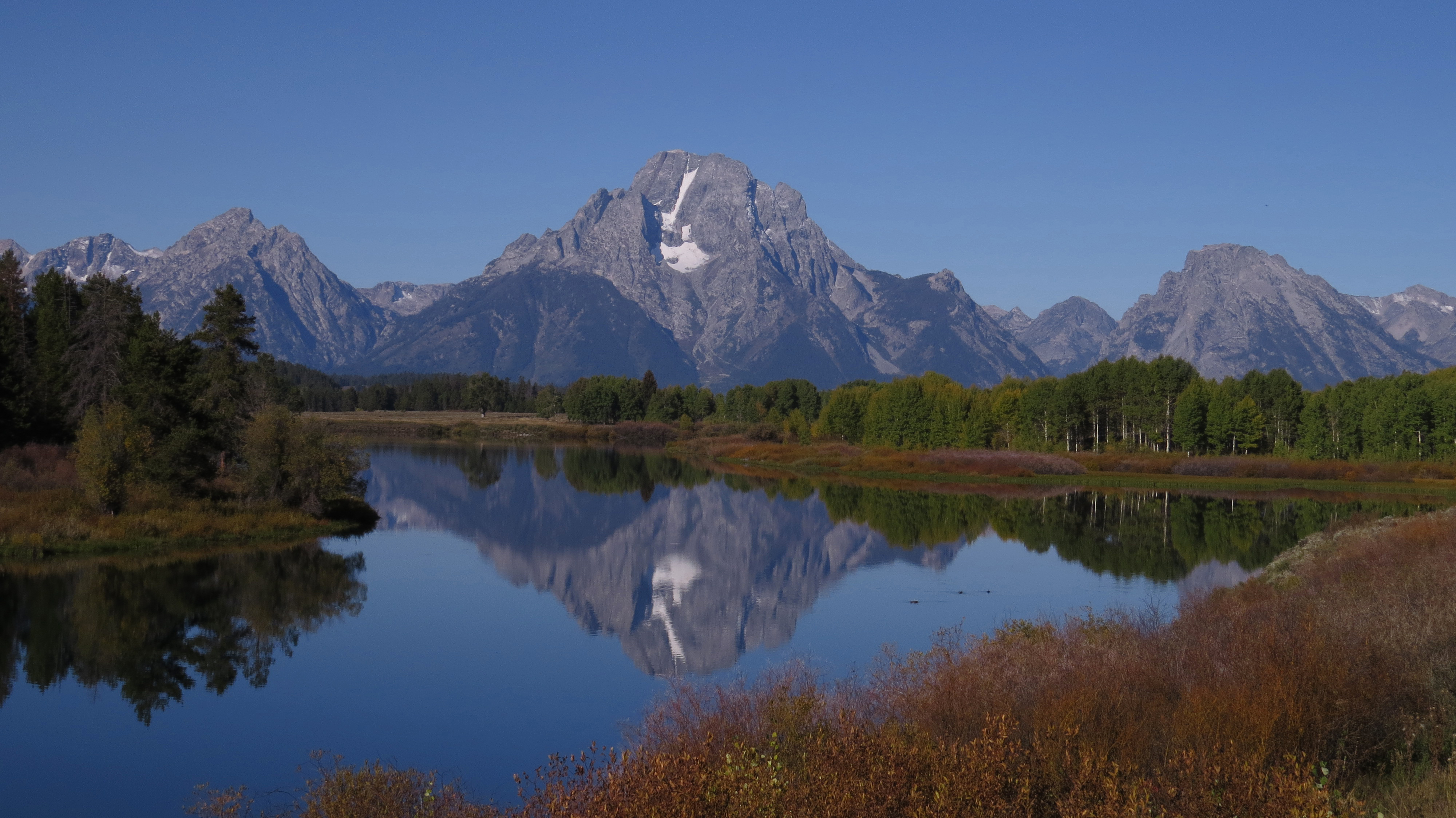
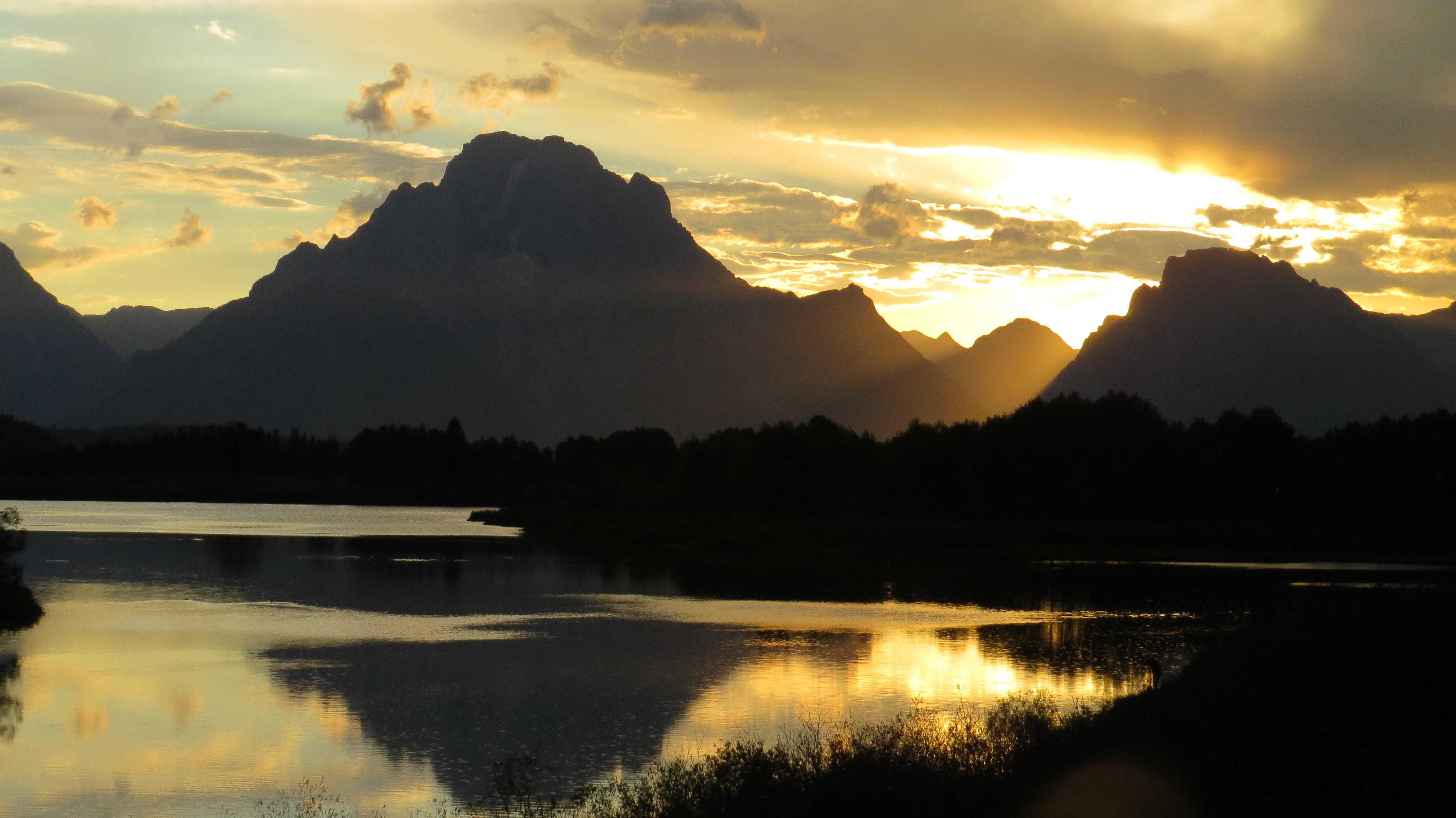
The diversion in plans was fortuitous, since the skies opened up for next few days with sometimes violent thunderstorms and serious warnings for this area broadcast on the radio.  One night, lying in the tent below tall trees, the tent wall suddenly lit up with a flash of lighting.  Before I could say “one one thousand” thunder exploded above us, vibrating the tent walls.  Torrents of  rain pelted the tent.  The thunderstorms swept through, chasing each other like gods in some otherworldly battle game.  We stopped  at Oxbow Bend and found ourselves running for cover in the car, then emerging 10 minutes later to view a shimmering sunset of bronze, copper, and gold. That week of backpacking would have deteriorated into an exercise in misery, sodden and stinky gear, and friendship-destroying crabbiness due to being tentbound with wet, rank-smelling gear.  That type of trip is best done solo as penance or self-discovery.

That night, Brenda’s bicyclist friends arrived late, soaked and cold from an ascent and descent over the 11,000 foot pass.  They all had dinner together at camp and talked for hours.  I was tired from days of driving, late nights, the aborted trip, too much work before I left, a friendship going south as my friend imploded his own life, and so on. I lay in the tent instead of visiting, listening to the rain, the voices, drifting in and out of light sleep.

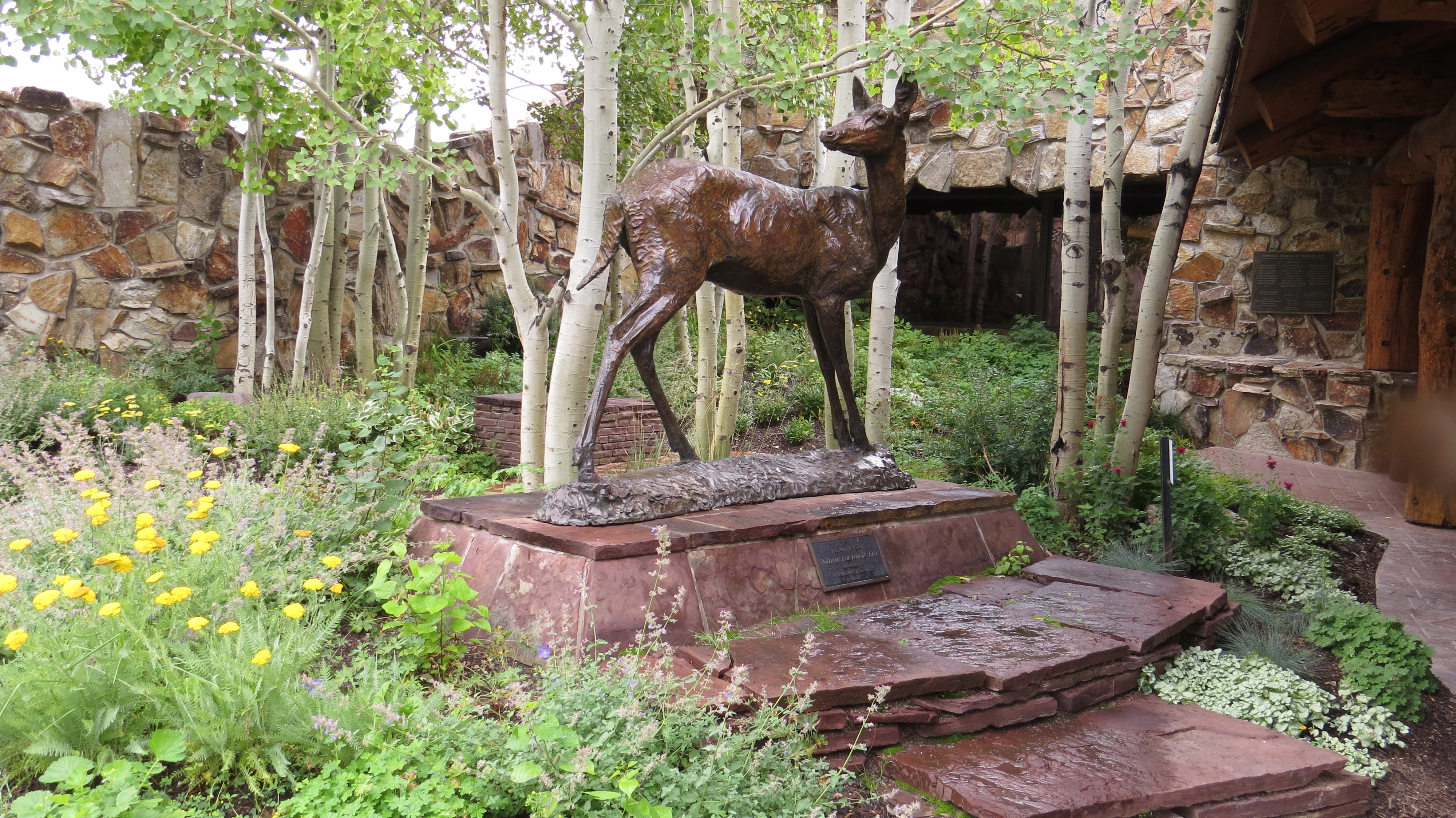
Setting of the National Museum of Wildlife Art

Setting of the National Museum of Wildlife Art

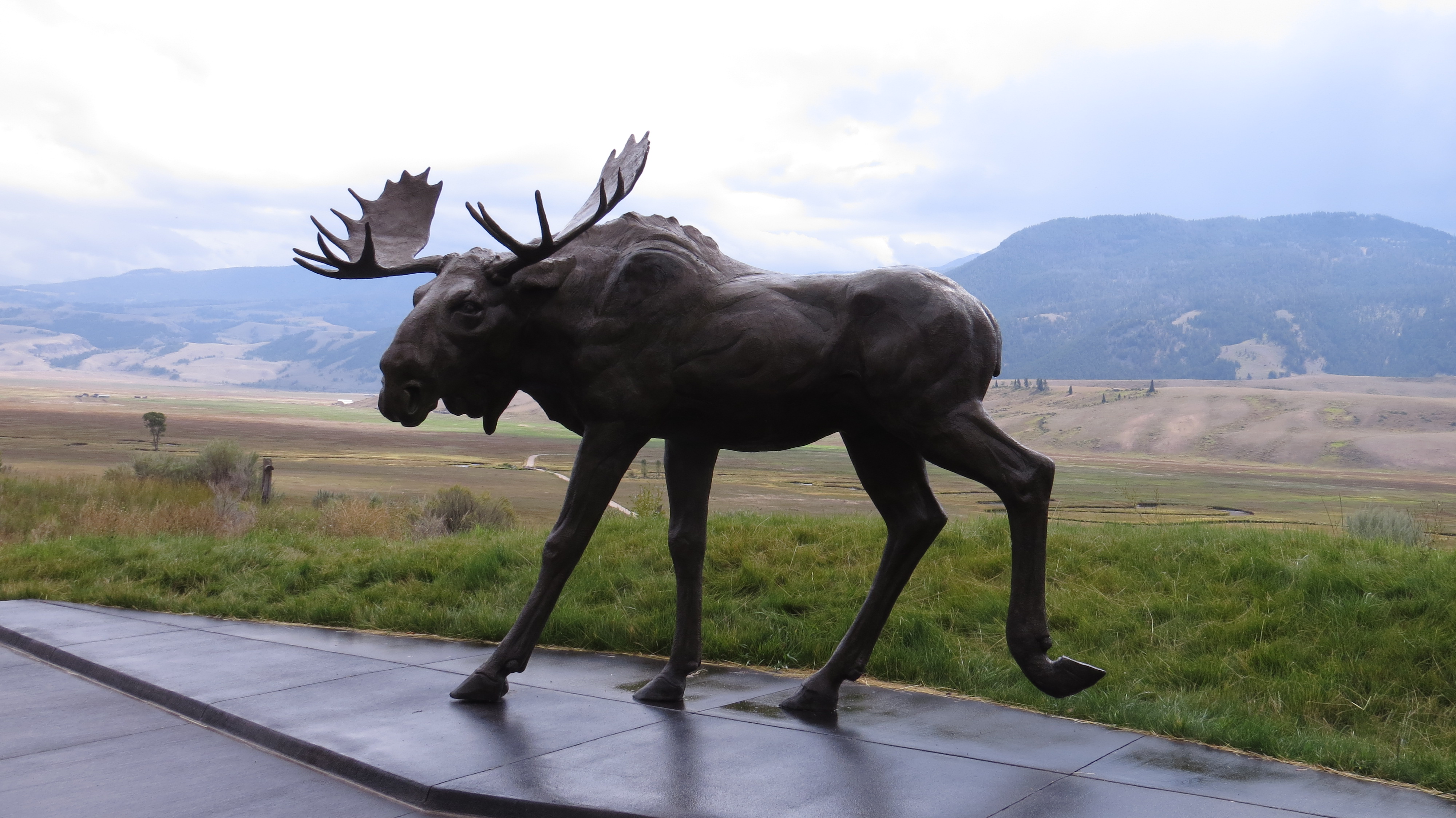
On the first stormy day, we dodged in and out of severe thunderstorms on the  drive to the National Museum of Wildlife Art outside of Jackson to view the annual Western Visions show (http://www.wildlifeart.org/).  The architecture of the museum is the first piece of art you see, a wood and stone structure artfully designed to evoke a rock outcropping on the hill above the refuge.  The sculpture path winds around the facility and across the ledge, a dramatic and most appropriate setting for large scale animal sculptures. A bull moose appears to be walking down the path as if we had stumbled across him on a trail. The interior is loftier and more spacious than the exterior promises, modern yet organic in feel.

Sculpture Walking

Sculpture Walking

The museum does a wonderful job of education and interpretation.  I learned that wildlife art  became so popular in America because here, anyone could hunt, whereas in Europe, it was the privilege of the titled only.  Struck as I was by my own loss of a disintegrating friend, I found my face stiffening to avoid tearing up at a sculpture of an old, injured elephant bull being helped by his comrades (a true scene, apparently, and chosen to reflect the World War raging around the artist). The signage pointed out the license taken to show family groupings that never exist in nature, where un-Christian promiscuity is the norm and males frequently run off and leave single mothers to their own (much to the relief and sometimes insistence of the single mothers).

My favorite wildlife artist is internationally renowned Robert Bateman, whose charismatic bison bull, “Chief” embodies to me the power of 65 million bison that once roamed North America.  His works are tremendously atmospheric and sometimes challenging to view, like the seal entangled in driftnet, and dead, oil-soaked birds. Like author Edward Abbey, Mr. Bateman is in his own way unapologetically curmudgeonly about our assaults on the natural world, unrelentingly devoted to nature, and I admire him for that.

Bateman was long ago reviled by other artists for apparently oversaturating the market with art and prints, though for most of us, his reproductions are our only opportunity to bring wildlife art of that caliber into our homes.   And for some, those prints are an inspirational reminder that pushes us to go to museums and buy memberships, to contribute to foundations, perhaps someday to buy an original.  To hell with the kerfluffle about reproductions- I am glad such a visually strong advocate for wildlife has been able to earn a living at it.

Entryway Garden

Entryway Garden

Brenda and I  moseyed through the museum, lulled into that museum stupor that eventually occurs when brain and eyes are full.  We made sure to find her friend Bill’s painting and sketch, and I looked for Joshua Tobey’s sculpture and Lindsay Scott’s drawing.  Then we went to lunch and talked some more before returning to camp and meeting up with Bill, who shared our site and camped in his truck.  With another stormy night, I envied his sleeping space.

Hobbling the trail above Jenny Lake

Hobbling the trail above Jenny Lake

I did set out on a backpack alone, since Grand Teton is the Wild West compared to Yellowstone and had no problem issuing a solo permit in bad weather and bear country to do the Paintbrush Divide/Cascade Canyon loop. I hiked up in deteriorating weather, passing an exhausted young guy who said he camped in the thunderstorm and snow at Holly Lake, barely slept, and gave up going over the pass.  I did pretty much the same; with backpacking boots, no ice axe, and no buddy, I figured the 4 inches of ice on my tent was a sign to enjoy a nice hot breakfast and mosey slowly out to Jenny Lake, enjoying the sunbreaks along the way.  Brenda and I met up and she told me how she and Bill found moose by Gros Ventre, how he was traveling around in a dispersed group with several of the artists, all calling one another to signal a wildlife find.

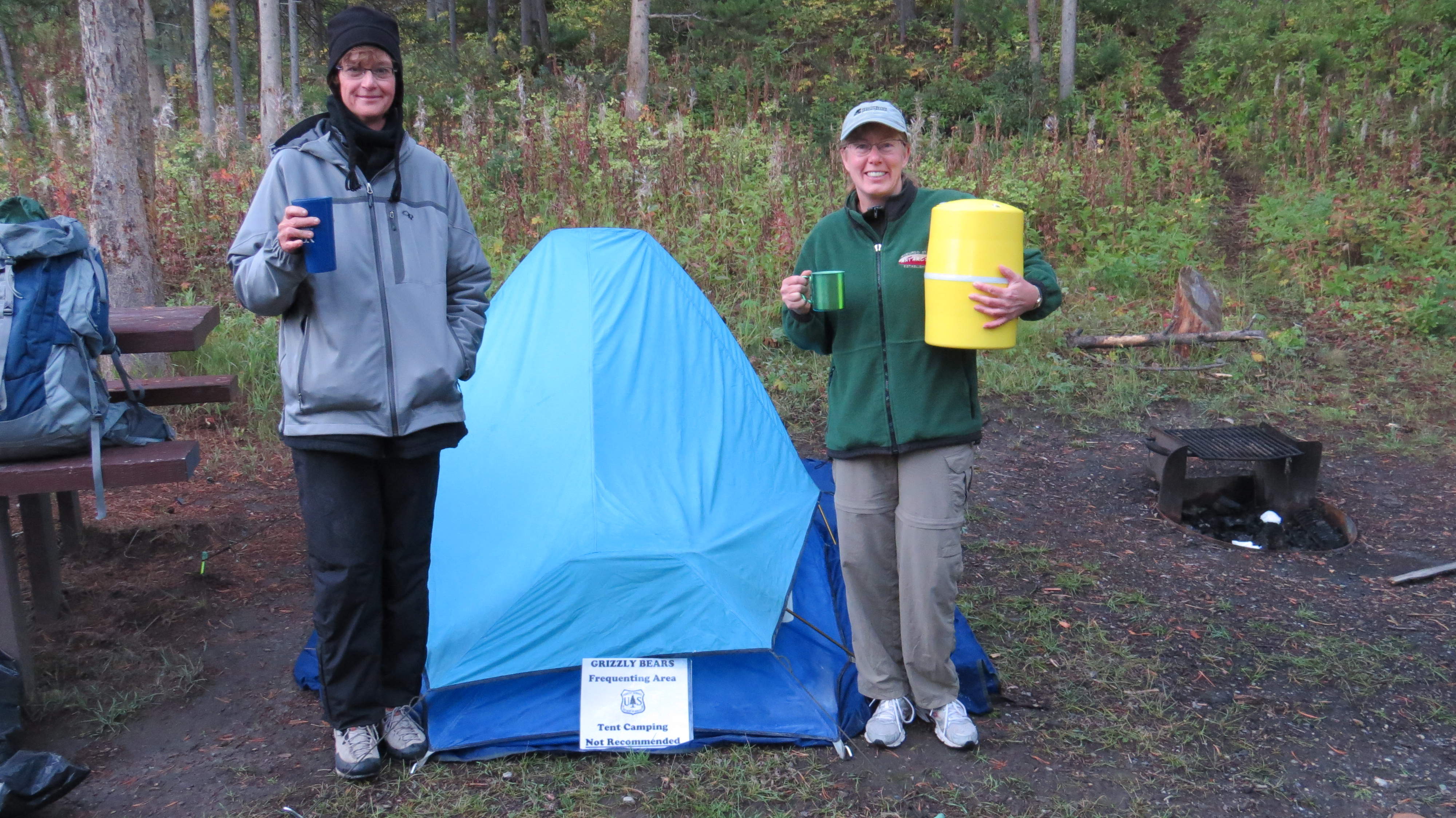
And late that night, the call came.  Three grizzlies, maybe 2 1/2 years old, on a moose carcass.  Not going anywhere too fast, but had been there a couple days, so no telling what was left.  Brenda wanted to take the boat across Jenny Lake and hobble, still sore, up the trail.  Anxious to see the grizzlies before they left, I bolted up the trail to wear off some energy, then turned around and met Brenda.  We packed up and headed out to find a campsite, then the grizzlies.  The Forest Service campground was marginal, by the highway, and plastered with signs warning that it was a grizzly bear frequenting area, and tent camping was not recommended.  Since it didn’t say “not allowed”, we went for it.  And then we headed up the road to the scene, looking for Pete Zaluzec, an artist Bill says is unmistakable for his resemblance to Santa Claus. Santa Claus was not the artist Pete is, but the description helped us find him instantly.

Bear Paparazzi

Bear Paparazzi

Pete and Bill said we  missed the morning’s excitement, and arrived in the heat of the day as the bears slept in the shade near where they had buried the carcass.  This was my first real field lesson in grizzly signs:  if I had been hiking by, likely hot and wearing sunglasses and not seeing too much around me, I might never have noticed the dug-up dirt by the tree.  The ravens were quiet, so I would have cruised right by, and like one hapless coyote, found myself confronted by a large bear exploding out of the shadows to defend its food.  The coyote was faster than I could ever be, so it survived. If I had approached from the other direction, I would have simply tripped over them and likely paid dearly for that little surprise.

The bears eventually did as they had for days, and rose to pass through the woods to a pond on the other side.  That’s when things became even more educational.

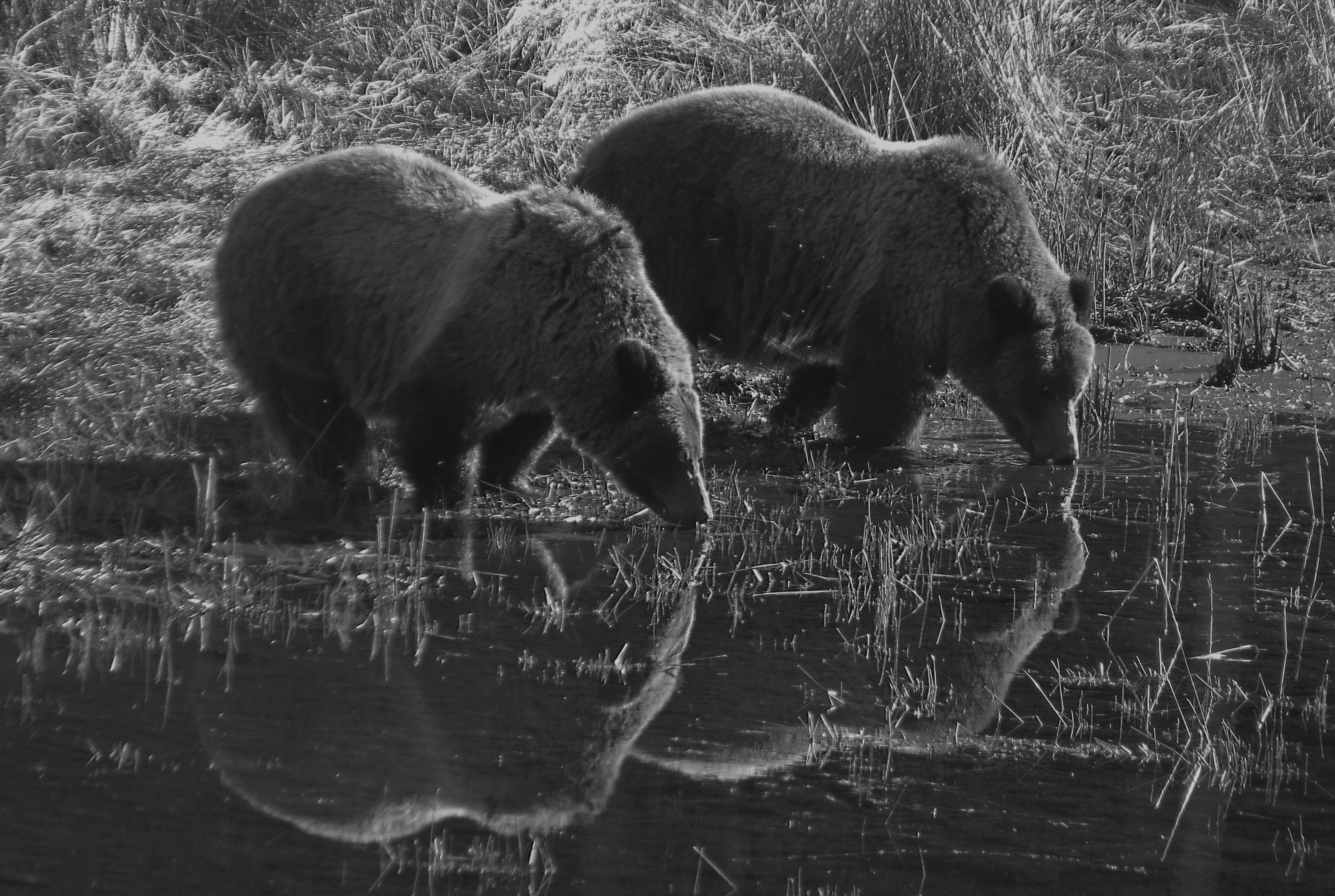
BrothersDrinkingWe drove around a corner to the ponds and found a line of cars forming.  Word of mouth spreads rapidly among artists and local grizzly watchers.  And these were famous bears, two of them cubs of Bear 610, one of them an adopted cub of her mother, Bear 399.  Bear 610 is the last of Bear 399’s cubs, the rest removed for cattle predation.  I find this out because a few SUV’s show up with stickers that say, “I saw Bear 399” and “I saw Bear 610”. And when a Wyoming Fish and Game Biologist shows up, the owners, women with Germanic accents, hiss at him loudly: “Zer is zee babeesittah, come to vatch zee babees.”  I think it is a joke, but he says not so much.  The roadside bears have become habituated to people, too habituated.  Defenders of Bears 399 and 610 have followed the bears diligently, perhaps meaning to protect them from removal. This has backfired a little, with the cubs ending up between to lodge buildings at a resort recently.  They were hazed with firecrackers and rubber bullets.  Fortunately, a hunter shot this moose and took only backstraps and roast, said the biologist, leaving the rest for the cubs, who smelled it from 5 miles away and came up from town.  They are still at risk, he says, and need to stay away from people.  “All they need is for one of these people to drop a lunch, and it’s over,” he says.  “These bears are one peanut butter sandwich away from death.” He says he’s not an enforcement officer, so he can’t do much to keep people away.

The cubs were weaned this year at 2 1/2 years old, coming out of the den thin.  The biologist said everyone was surprised they made it on their own.  They have fattened up on a good berry season, and if they can den up without too much trouble, they will disperse next year and hopefully stay wild.

The biologist is driving a worn work truck, accompanied by his dog, a terrier type obsessed with a slimy rubber ball. The biologist is driving around posting signs on trailheads because there are six grizzly boars in the area on carcasses, and they’re in a mean mood, even charging people on horseback.  He came to this site because a hunter reported that the line of cars was blocking the bears from reaching the cleaner of the two ponds. It’s that time of year for the bears, where they’re putting down 20,000 calories a day to make it through the winter.  It’s also the hunting time of year, when successful sportsmen and women are leaving gut piles that attract bears, or even partial carcasses like this one.  Hunters are out there on foot and on horseback, and confrontations are occurring as a result.

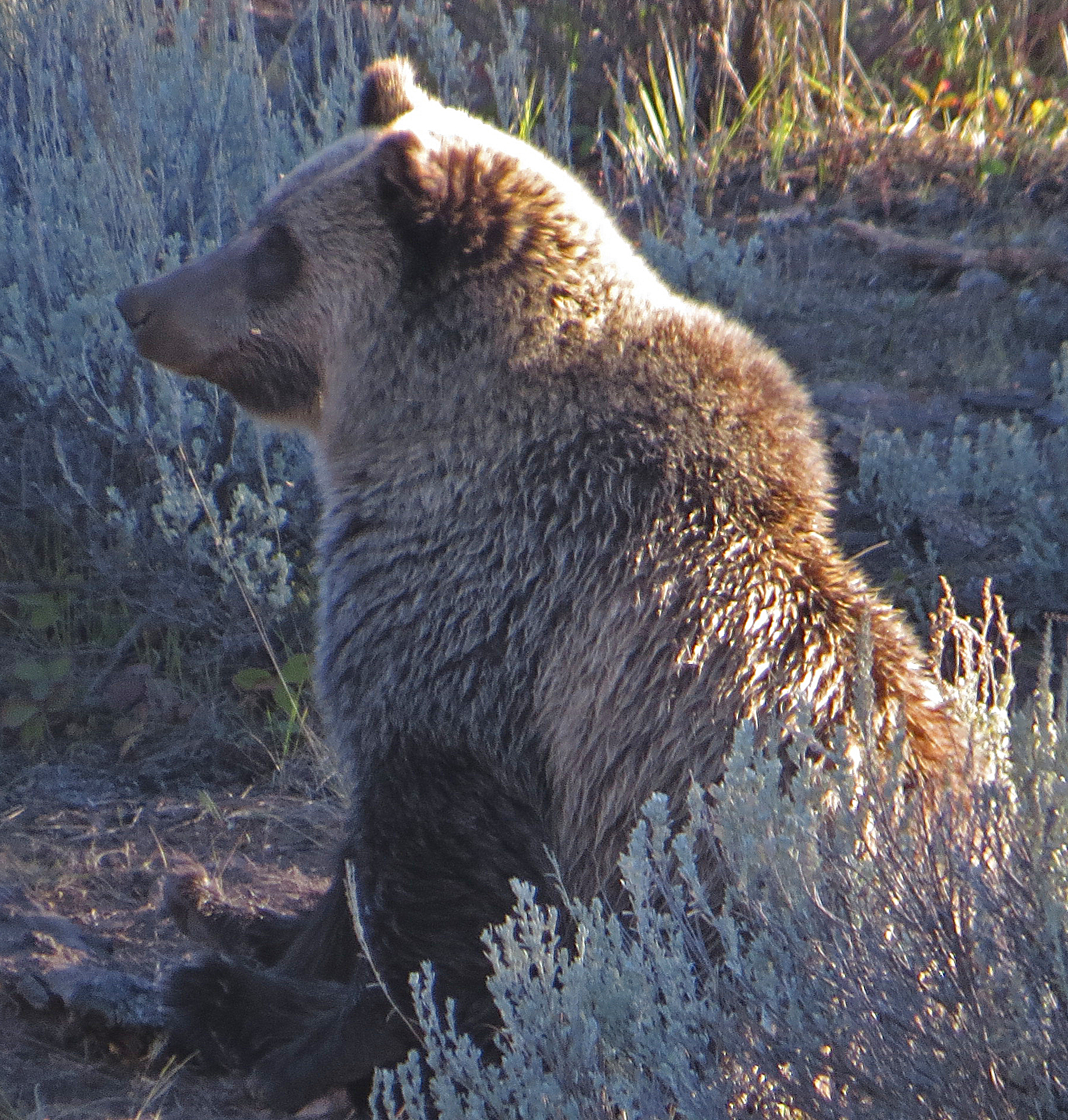
YouLookLikeFoodtoMePondPlayThe unwary bears come out of the trees and drink from the pond, then wade in and appear to be playing with submerged logs and pond weeds, sometimes moving in a sort of soggy bruin synchronized swimming routine.  There is a little play swatting, splashing.  One bear, chocolate colored, gets out of the pond.  I keep watching the bears in the pond, figuring he has gone into the woods.  I am on the edge of all the important artists and wildlife watchers, feeling small with my tiny super-zoom and artistic anonymity, really just an intruder.  And then I look up and see that the bear has circled around the pond and is standing 50 feet away from me, staring.

“Uh, bear on the right,” I say nervously, wondering whether the bear would really charge a crowd of thirteen.

“Where?” says a photographer, whirling around with a huge lens and tripod.  The bear turns and walks toward the woods.  I have learned one more lesson taught by the couple who got attacked in 2010 on the Mary Mountain Trail in Yellowstone: never lose sight of a bear in the area, watch for it to circle back on you.  He died for this mistake, she escaped.

A French television crew has showed up by the forested area to film the bears. They were making a documentary in Yellowstone and Grand Teton and got word of the bears. I wonder what they will say about these bears.  Are they giant, frightening predators, waiting to prey upon the unwary hiker or hunter with fang and claw?  Or are they increasingly depleted large mammals caught between the wilderness and our predator-intolerant civilization, walking the thin wire between wildness and a familiarity that will mean certain death for them?

Contemplating the future without peanut butter sandwiches

Contemplating a future without peanut butter sandwiches

We treat Bill to dinner at the Hatchet Resort, delicious pan-fried trout, and talk mega-history.  Bill was a zoologist at the Denver Museum of Natural History before he became a full-time artist.  Besides having a finely developed understanding of animal anatomy, his experience has given him an expansive perspective on the planet, reaching across time immemorial and so stratospheric that barely visible are the specks of three cubs, a few artists, and a couple nice pan-fried trout dinners.  He says we may tear the skin of the earth apart, send streams of poisons across the land and into the waters and atmosphere, but the planet will heal itself when we finally do ourselves in.  The earth may look different, he says, but it will persevere and sew itself back together again.  It is just too large and too deep and too powerful for us to really change it much.

WarningAnd on that lofty note, we pick our way along the highway to Hatchet Campground to sleep easily despite the bear warnings, knowing that the cubs are resting far away, near a natural food source all their own.

Having Survived the Night

Having survived the night

Thus ended a week that was supposed to be an adventure in backcountry travel and  navigation, but instead, became one more skipping stone in a stream of perspectives on our human experience in a natural world.


For more information:

Heart Lake Loop-http://www.trailguidesyellowstone.com/yellowstone_hikes/heart_lake_trail_yellowstone.php

Paintbrush Divide/Cascade Canyon Loop –http://www.backpacker.com/destinations/hikes/286618

The Wildlife News- http://www.thewildlifenews.com/tag/grizzly-bear-610

Bill Alther’s art- http://www.williamalther.com/

Pete Zaluzec’s art-http://www.petezaluzec.com/

The Hatchet Resort- 

Home


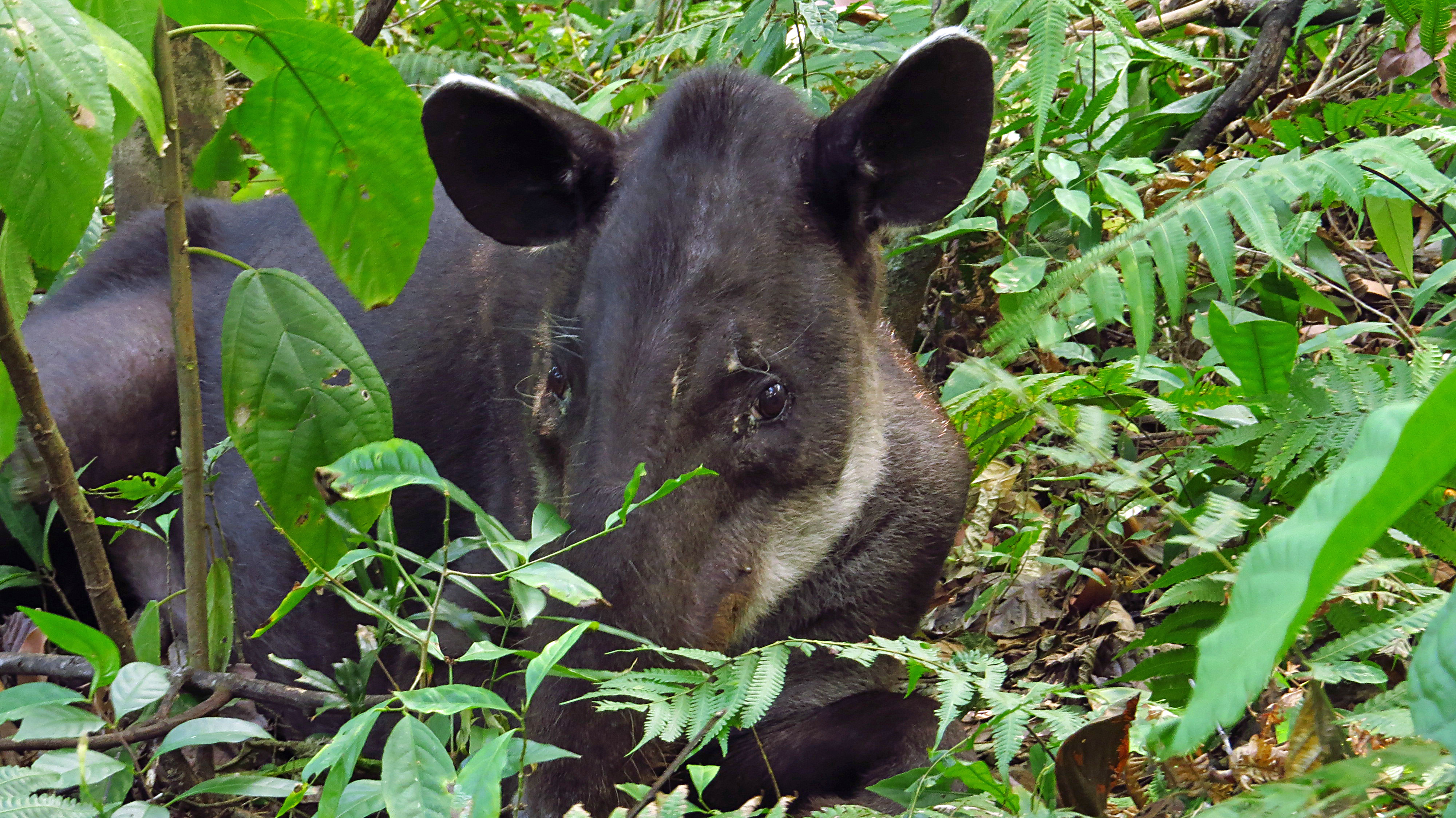
3022014_TheLovelyTapir2The academics found it, the four women from the University of Costa Rica combing through the woods for fungal samples. They were on their monthly visit to the Osa Peninsula rainforest outside Corcovado National Park, traveling the trails above La Leona Ecolodge to their designated sampling sites. One PhD candidate had told me the focus of her thesis was establishing fungi as indicators of climate change.

I had seen them below the trail on the slope, and smiled and waved as I passed. Then I stopped to take photos of the little things that always catch my eye, frogs and plants and such, and they passed me by. I caught up with them at their next sampling site when the professor type, a compact, confident woman my age, waved me over. “The danta!” she called. “Here is the tapir!”

And there it was, resting in the vegetation off trail, its long proboscis on the ground, ears round and upright like an enormous sow-sized mouse, eyes watching me; calm. In the shaded forest area, the danta appeared to be wholly black. It lay slightly on its side, legs partially tucked, taking advantage of the dappled shade and sea breeze traveling up from the ocean to weather the heat of the day. I took a few bad pictures, too excited to have a steady enough hand in the low light. But I had to, really, in case I never saw one again. I wanted to let sleeping tapirs lie, so I turned around shortly. Since I am old enough to do strange things without apology, I stopped and said to the tapir,”Thank you so much for greeting me in your home, my friend- I will be back to see you sometime again.”

While the  Osa Peninsula affords the best opportunity see a Baird’s tapir, I felt fortunate to encounter one so close. The staff at La Leona said one visited the open air restaurant one evening while they were cooking vegetables. Baird’s tapirs are shy mostly, as well as retiring.

These odd-toed ungulates, distantly related to rhinos and horses, persisted for 35 million years little changed, eating vegetation and serving as critical seed dispersers and occasional food for jaguars and crocodiles. Indigenous peoples likely hunted them for food.

Then came the scourge of deforestation for banana plantations and cattle ranching, along with waves of immigrants who increased harvest of tapirs. Costa Rica now hosts fewer than 1000 tapirs, and the number continues to fall due to habitat loss, hunting outside protected areas, and poaching.

The tapir reproduces slowly, the second strike against its future. Gestation is a year before a single offspring is produced; another year or two passes before the young is sent on its way. Tapirs are largely solitary, dependent on forests with nearby water sources to wallow or wash in. They reportedly frequent the Sirena Ranger Station airstrip to graze on the disturbed area.

Tapirs depend on habitat connectivity like grizzly bears, wolves, elk, bison, and other large North American land mammals. Even at 2.2 million acres (~890,000 hectares), Yellowstone National Park does not have enough habitat for the animals. Bison leave for better food sources come winter only to be killed when they step over the park boundary. Wolves travel with elk in hunting season and get harvested after they follow the elk past the invisible line that protects them.

There simply isn’t enough space: the Yellowstone to Yukon initiative promotes development of a habitat corridor to correct the “island effect” .

In Costa Rica, the Path of the Tapir Biological Corridor has the same goal to benefit tapirs and a host of other species that suffer from habitat fragmentation.  Even the resplendent quetzal needs to travel, but forest fragmented for open cattle pasture  makes it vulnerable to raptor predation as it flies from the cloud forest to the lowlands. We stayed at lodges that promote the project, and conservation. Hacienda Baru Wildlife Refuge and lodge  was a wonderful treat of trails full of wildlife and a great conservation story to boot.

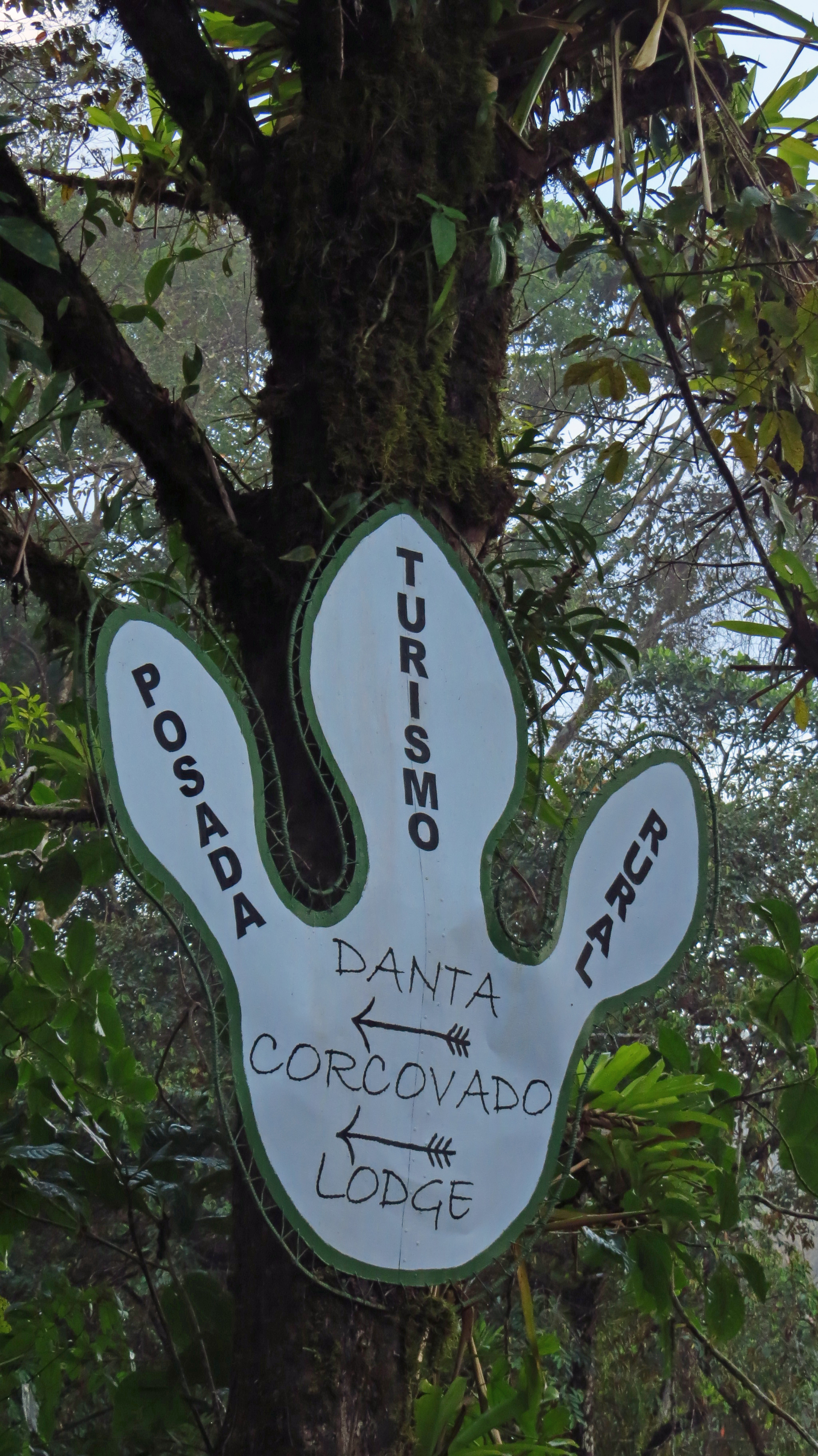
The footprint of the danta, Danta Corcovado Lodge

The footprint of the danta, Danta Corcovado Lodge

2282014_DantaLodgeBRoom

Danta Lodge has anti-skid danta footprints in the shower-of course!

Danta Corcovado Lodge at La Palma is the most sustainable place we stayed, a truly magical, hand-crafted child’s dream of the tropical rainforest. The lodge is all things “danta”: a three toed danta footprint is the logo, silverware holders, candle holders, and even anti-slip patterns on the floor of the open air showers.

But that passionate commitment to this large, shy animal may not be shared by many visitors, or perhaps even biologists. When I returned from my danta encounter to the tent camp, I excitedly showed my pictures to my friend and travel buddy, a marine biologist and birder. “Huh”, she said, clearly not enthralled. “They’re so ugly, you wonder why anyone would care about saving them. It’s not like jaguars and quetzals- those are beautiful!”

Tapirs- not winning a beauty contest!

Don’t judge my friend too harshly on that statement. Google “is conservation a beauty contest” and you will get an article from the Guardian reporting that scientists champion the beautifuland charismatic and neglect species that aren’t show-stoppers and therefore money-raisers . A former scientist turned science teacher has started a Tumblr site called “Endangered Ugly Things”.

And there is the curious irony of the heroic rescue of the hideously ugly California condor while sending the more repulsive condor louse into an eternal night by delousing the last wild birds as they were brought into a captive breeding program.

The Baird’s tapir isn’t cute like the panda, and doesn’t benefit from the charisma factor. It doesn’t run in massive migratory herds, or even multi-generational family units like elephants, with mysterious vocalizations and mystical associations with place and death. The tapir isn’t venomous, nor does it hunt in some spectacular fashion by tooth and claw: it is more a forest workhorse, fertilizing, tilling, and cracking and dispersing hard-coated seeds.

In Costa Rica, the market sells what people would love and would save if it were threatened.

Gift shops specializing in local artisan works have carvings, paintings, weavings of scarlet macaws, the resplendent quetzal, monkeys, blue morpho butterflies, toucans, and so on.

In the wonderful Jagua Arts and Crafts in Puerto Jimenez, I struggled to find anything to honor my tapir encounter, and was about to give up after we combed the whole shop. My friend may not have been so enamored of the tapir, but she was determined that I should have a memento,so she asked the clerk if they had any tapir-themed item.

The woman pulled open drawers of painted animal carvings, dug through the jaguars, monkeys, macaws, and even sharks, and finally found a single tapir carving. That was it for the whole store.

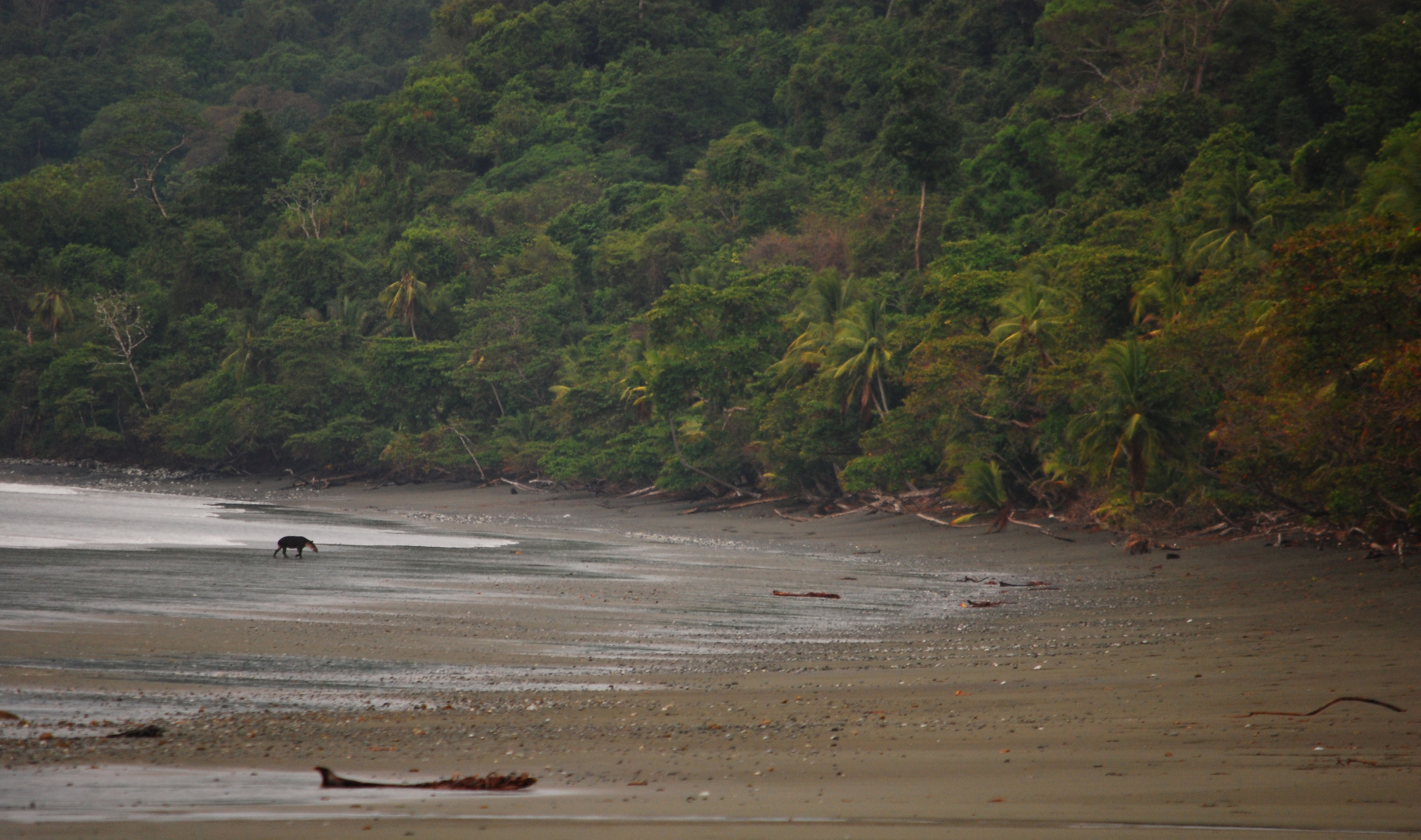
The tapir, coming out of its shower

The tapir, coming out of its shower

Danta Corcovado Lodge- statue of the danta

Danta Corcovado Lodge- statue of the danta


On our last morning at La Leona, a guide ran up from the beach as we were all eating breakfast in the open air restaurant. “Come now!” he called. “There is a tapir on the beach!” We all ran down with the ever-handy cameras and binoculars and the guide set up his spotting scope. The animal was at a distance,  walking slowly out of the surf and toward the forest.

The guide volunteered that “the tapir takes the shower in the morning to remove the parasites, then it goes to bed in its forest during the day.” I smiled at the description, anthropomorphic perhaps for ease of translation, or for better understanding by the foreign tourist. Here we were, “glamping” in simple tent abodes with open air showers, no electricity and no hot water, but we still needed a domicile context to understand nature.

My buddy was shaking her head after looking in the scope. “Well, at least I saw it. But that snout- they’re just so ugly.” “Don’t listen,” I told the distant danta. “You are lovely in your homeliness and worthiness, my endangered forest friend. Have a good rest today. I will tell the world about you, and come back to see you again.”

Lamar

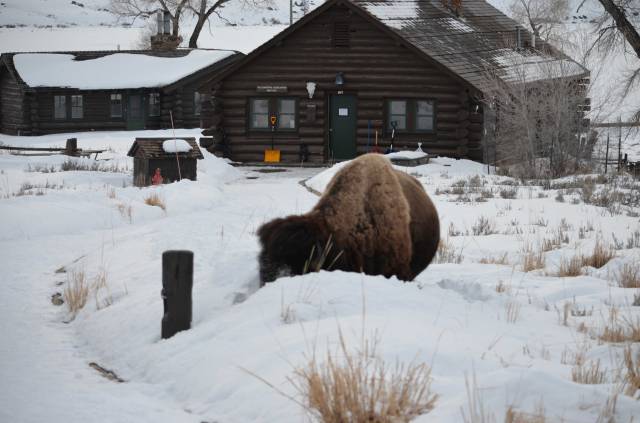
Lamar Valley Buffalo Ranch, view toward dining hall/classroom building complete with bison

For five days in March, I lived at the historic Lamar Buffalo Ranch in Yellowstone for “Lamar Wolf Week”. The Lamar Valley is dubbed a “Winter Serengeti” by the clever marketing folks at the Yellowstone Association for its abundant wildlife, very visible in the winter.

The drive from Snohomish to Gardiner, Montana travels over three high mountain passes and always has the possibility of storms, especially in the winter and spring. A friend and I drove in from Missoula to Gardiner in some pretty wicked weather- strong, gusty winds, blowing hail and snow and rain. As we traveled down 89 from Livingston to Gardiner, the sun came out and the temperature climbed from 32 to 50 degrees in about 15 minutes. We could see a storm up ahead, but where we were driving, ranch horses stretched out on the ground to enjoy the temporary warmth.

In Gardiner, we checked into the Absaroka Lodge for an overnight stay. The room- 2 queens and a kitchenette-was only $69 with tax, and was bright, spacious, and clean, with great storage and a balcony overlooking the Yellowstone River. We must have had a deal because the price is now $135 any season of the year, more consistent with the cost of most places in the area.
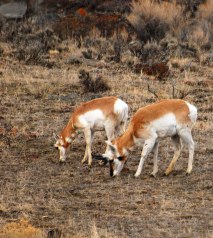
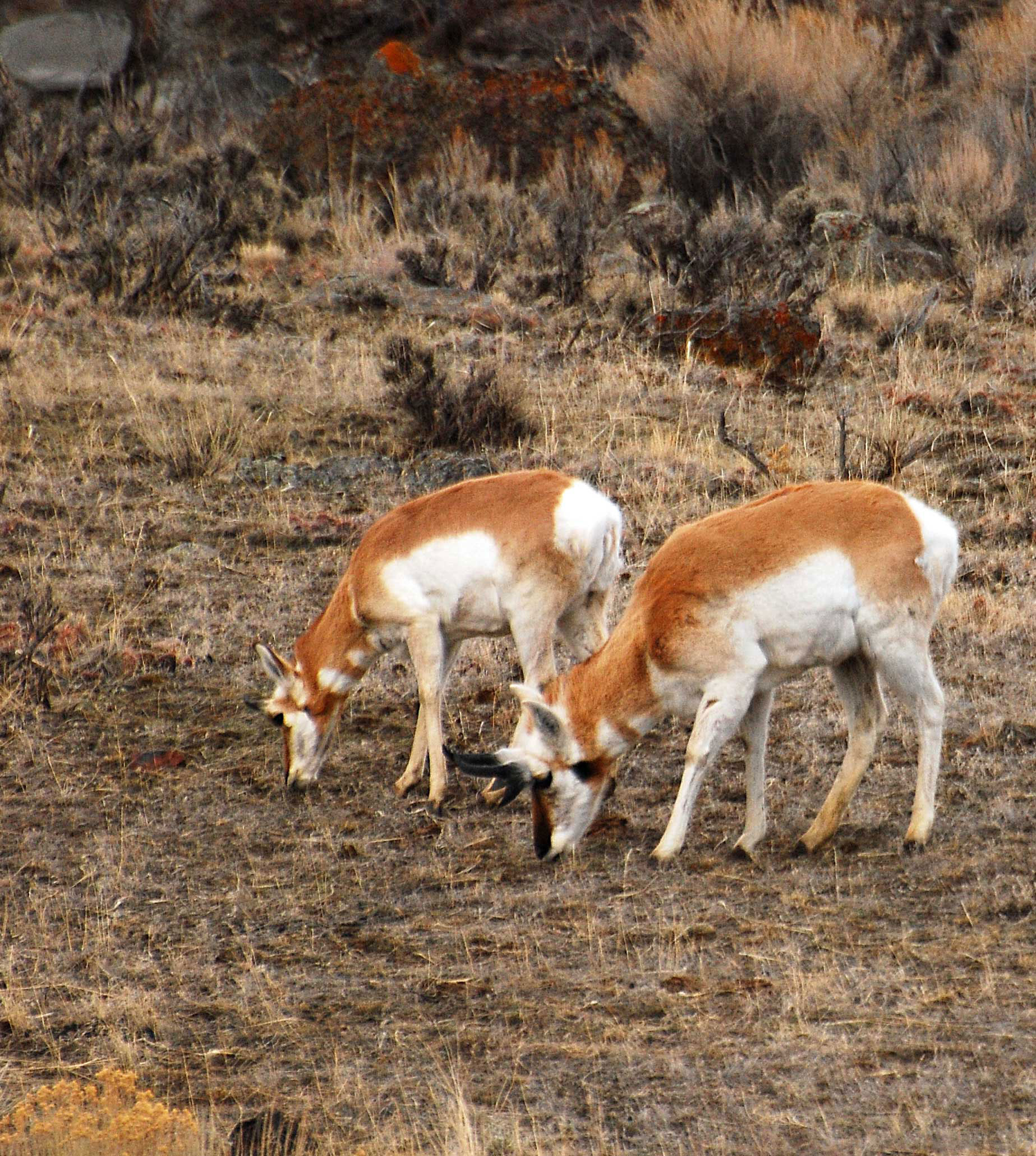
Pronghorns

Pronghorn antelopes

We took a drive into the park, about ½ mile away, to see what we could see. We immediately came upon a small herd of pronghorn antelope lying low in the rising wind, conveniently posing by a pullout and interpretive sign that said “Wildlife Migration”.

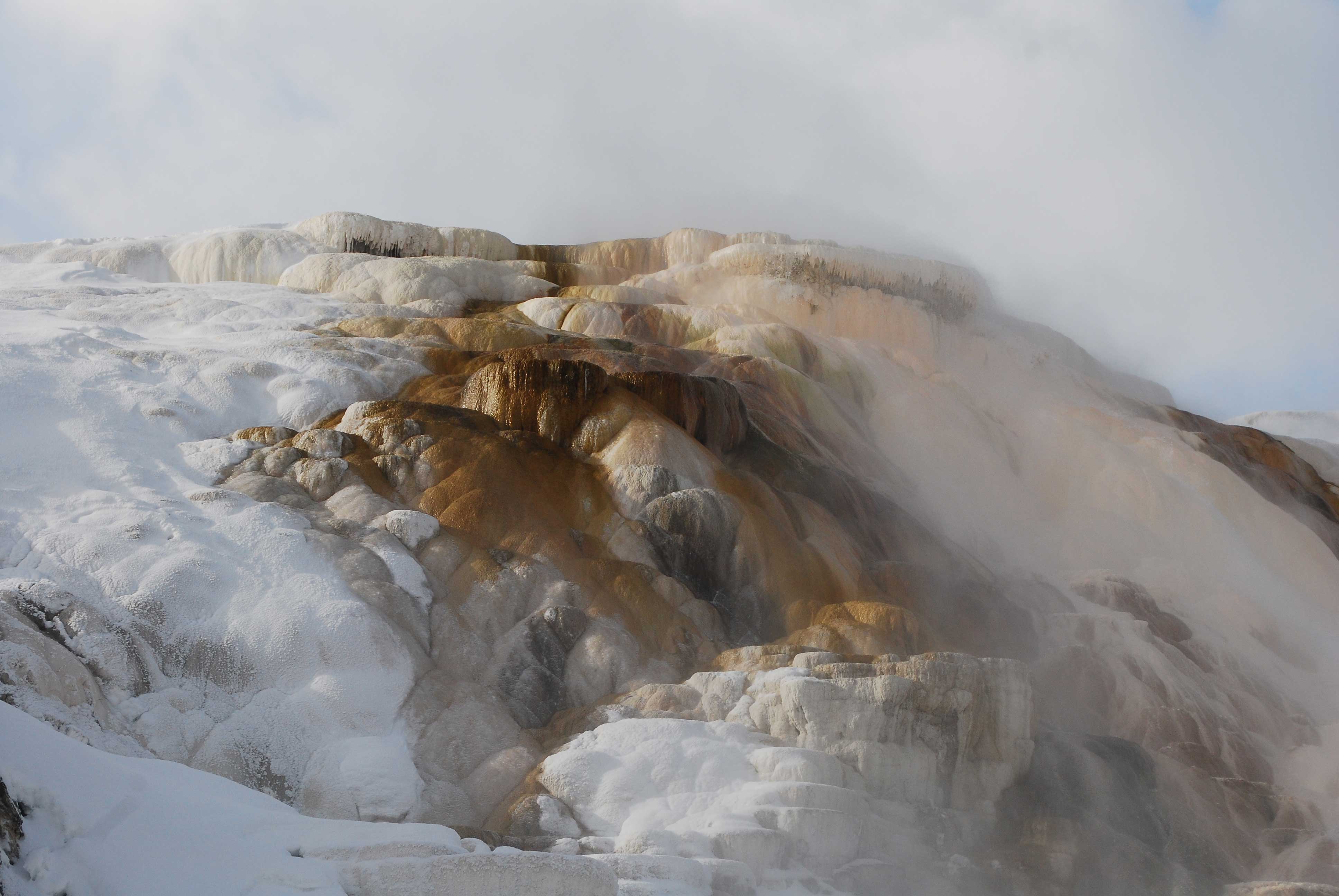
We drove to Mammoth and up the hill past the thermal features, passing a small group of bison hunkered down in the wind in a snow free zone by a thermal area; lying low on the toasty ground with butt to the wind is a way to get through storms. It turns out that thermal areas are the basis of survival for bison in the even snowier interior section of the park by Hayden.

Mammoth Hot Springs

Mammoth Hot Springs

As we drove along, we saw a lot of animals near thermal features and on the road. We were seeing one of the important features of Yellowstone in winter, highly visible wildlife due to the road. Traveling the plowed road uses the lowest energy route to travel from one point to the next, avoiding a struggle through the snow.TheEasyWay

TheHardWay

The hard way to travel, compared to the road

We saw a bighorn sheep on the way toward Tower Junction. The sheep was pawing at the slope to get at the roots of plants, with little else to eat. Later, one instructor said that at this time of the year, the animals have essentially “finished all the cereal and are eating the box”.sheep

Suddenly, the storm came upon us. Within 10 minutes, the temperature had dropped from 38 to 27 degrees and snow was piling up on the road. The visibility plummeted, sometimes to nothing but swirling snow in front of the windshield. Winter driving in this area is not for the inexperienced or faint of heart- the roads are steep and winding, with no guard rails by the towering drop-offs, and rapidly become really slick in a snowstorm. We turned around and passed the bighorn sheep, which had continued eating despite the sudden driving wind and snow, as had the now snowy bison.sheepinsnow

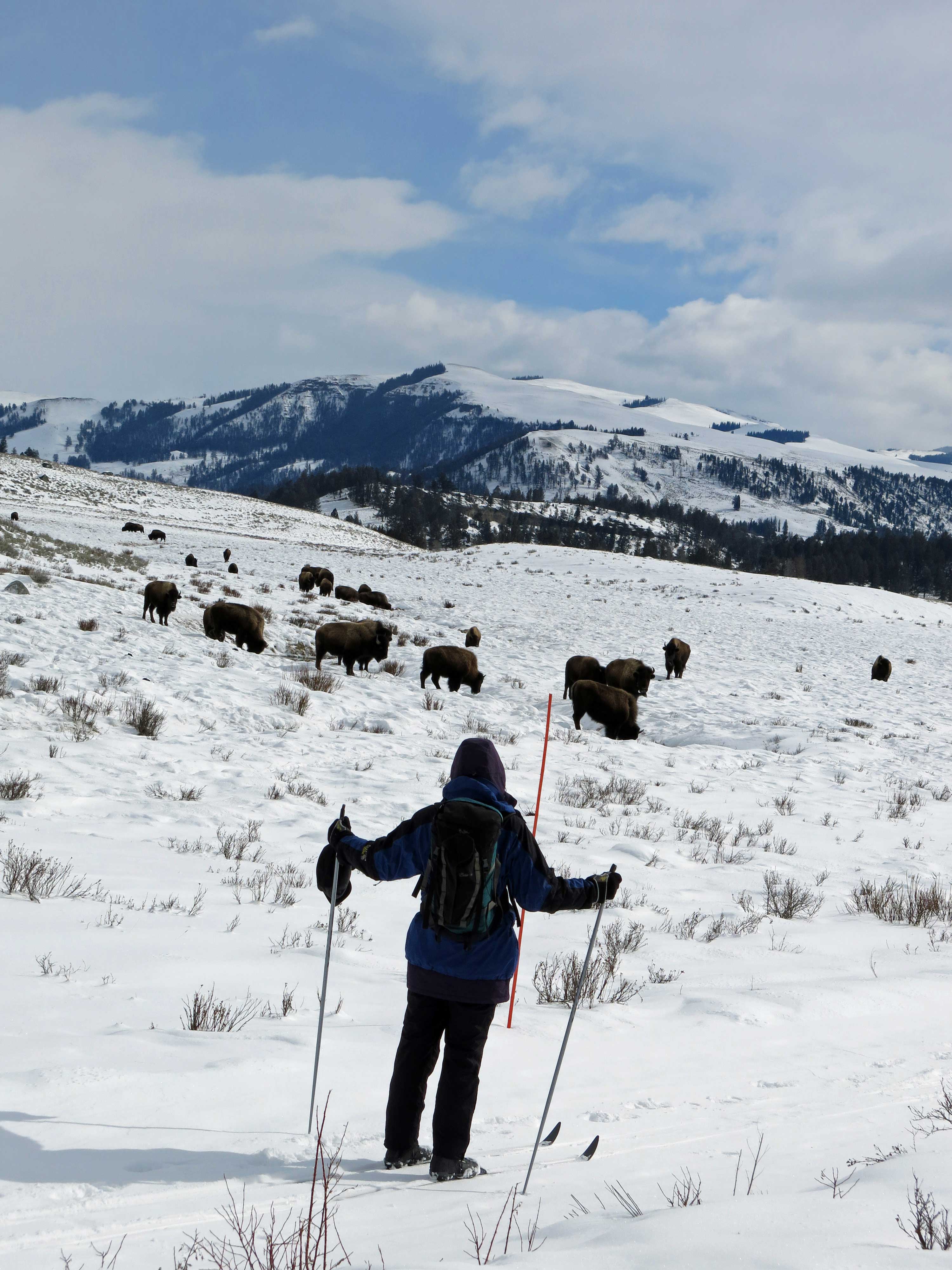
snowybisonThe following day, we drove down to Tower Junction and skied for the day. The storm was over but it was cold and windy, and the wind chill likely dropped the temperature far below the 24 on the thermometer. We skied out into the valley and passed a herd of bison trying to make a living in the lee of a slope by the river.BisonSkiing

After skiing for awhile, we toured the Lamar Valley up past Silver Gate to Cooke City, where the Beartooth Highway was closed for the winter. Silver Gate and Cooke City are the sheep and the cattle of the old range wars: Silver Gate has cabins and espresso for Nordic skiers, while Cooke City has motels and bars for the “sledniks”- snowmobilers.

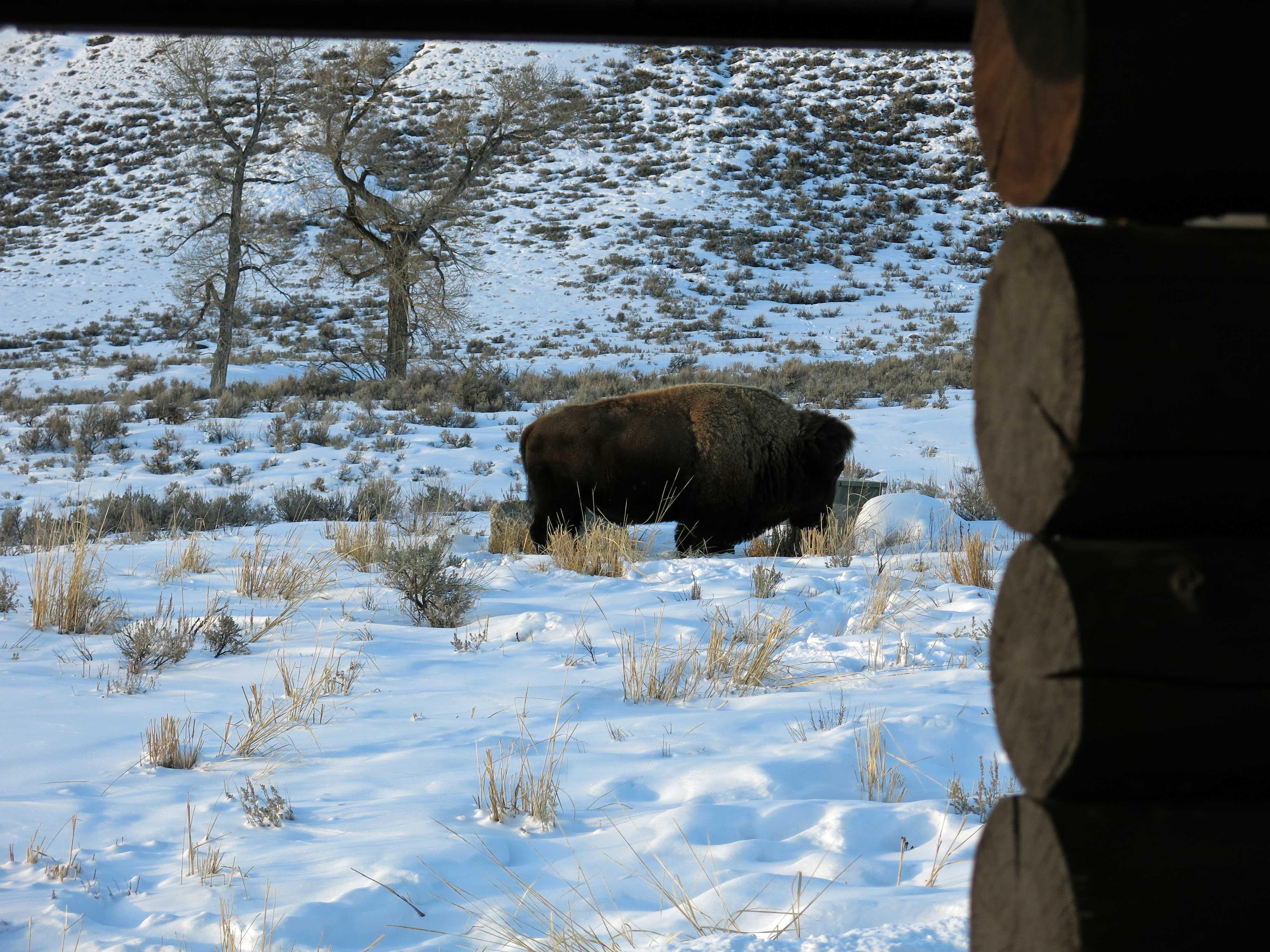
We checked into Lamar Buffalo Ranch and found our cabin, the nice but buffalo-beaten #7. The cabin was positioned next to a field where bison grazed, and the large beasts would use the stair railing to scratch their butts. The railing was wobbly, and the side of the cabin had tufts of bison hair rubbed on it.CabinPet
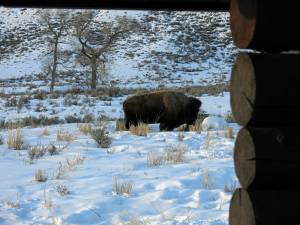
The Lamar Buffalo Ranch was the incorrectly named site where bison (they’re not buffalo) were raised to save the wild bison population. In the 1800’s, it was a jolly little East Coast vacation to take the trains out West and shoot bison from the windows on the way. And they were slaughtered to weaken the American Indian tribes who depended on them. By the late 1800’s, Americans were starting to get really worried about the rampant slaughter of animals, and the conservation movement was born. But it was too late- continued poaching continued to reduce numbers. Finally, the population was reduced from 60 million to only 25 animals, and an emergency occurred that required both Army intervention (the Park Service was the military in the beginning) and the ranch.

Today, the Lamar Buffalo Ranch is run by the Yellowstone Association Institute, an educational arm of the National Park Service. There is a central facility with kitchen and classrooms, cabins, ranger housing, and a really nice central bathroom with heated floors, lots of hot water in the showers, and immaculate daily cleaning.

We had signed up for a course where food was provided, and it was both a treat and wonderful. Everyone took turns on KP duty, which was a really small favor in return for some really nicely prepared meals. I couldn’t imagine the same number of us (class was full at 20-some) trying to elbow our way into the kitchen and cook every day.

Our day would start at 6 a.m. with breakfast, followed by trips out to watch wolves and wildlife. We would return for lunch, sign up for an afternoon snowshoe or winter hike, and go out for a few more hours. After dinner, there would be a program. The first day, we saw the two remaining Lamar Valley wolves that had not been killed in the fall Montana hunt. They had killed an elk, a feat for two animals, and we were able to watch activity at the carcass. We were all so excited to see them that we didn’t even notice a coyote chased off the carcass racing behind us until John Harman, our instructor, gently pointed it out. We did manage to get pictures of its mate going by a few minutes later, chin still bloody.coyote

Coyotes have not fared well with the return of the wolf. Once reaching numbers where they assumed a role as apex predator, their populations have been reduced 50% and they are relegated to stealing from carcasses with a watchful eye to make sure the wolves don’t run them off or kill them.

We watched a red fox hunt, first walking with head cocked this way, then that, listening for sounds of voles under the snow, then leaping into the air and doing a spectacular swan dive, front paws and nose first, to grab the rodents under the snow. They can reportedly plunge 2-3 feet into the snow using this technique.Fox

We snowshoed that afternoon up to the acclimation pen used for the “soft release” of the first re-introduced wolves in 1996. Historically, wolves haven’t fared any better than bison, but for different reasons. The “devil dog” of the Catholic church, supposed killing machine that would decimate livestock and herds of elk was systematically removed from the American West. While timber wolves persisted in the Great Lakes region, grey wolves were wiped out by the 1920’s using poison, guns, traps, and just plain torture.InternPen

In Yellowstone, lack of predators swelled the ranks of elk to unsustainable levels of 25,000-35,000 animals, many very old. The National Park Service had to start culling the herd in mass slaughters. In 1944, Aldo Leopold suggested reintroduction of the wolf to control elk and bring back the wild to Yellowstone but was dismissed. Finally, in the late 80’s, the idea reemerged and got traction. Through a years-long environmental review process which garnered a near-record number of comments, the government dealt with hate on all sides. Finally, approval of the reintroduction of an “experimental population” was gained, and the first wolves were trapped in Canada and transported to the park.

The idea of the acclimation pen was to bond the animals and get them used to Yellowstone so they didn’t stray to the ranches outside the park and prey on livestock. The pens were hidden in the hills to prevent people from killing the wolves. All materials were hauled up by mule. The elk and deer fed to the animals were obtained by two staff nicknamed “carcass queens” who would get a call from the highway crews when there was a road kill and sneak out to snag it (sneaking so that opponents didn’t lace the carcasses with strychnine first). Park staff would haul the carcasses up to the pens over their shoulders.
I was the first to arrive at the long- unused pen, and told to check for trapped animals that might bolt out the front gate at the site of us. The pen is in disrepair, something John feels should be addressed by either tearing it down and leaving interpretive signage or rebuilding it.

The strategy was mostly successful, although several wolves were lost outside the park (some shot illegally, a few removed due to sheep predation). The trip to the pen was punctuated by John, stopping at points along the way to tell the story of the trapping and reintroduction through the eyes of the larger-than-life colorful people who led the effort. By the time we got to the pen, the whole story was alive and afire in our minds, and the walk through the enclosure was silent and awestruck for all of us.

John Harmer had come to Yellowstone two years ago, unable to find a job as a poultry science major, tired of working as a cruise trip salesman, and fresh from several months backpacking in Europe. His dad, anxious to get him a real job, paid for him to take a three-week course for Naturalist Guide Certification. The Yellowstone staff was impressed by John’s really hard, high quality work despite having no background in education or even wildlife. He was hired on after the course and has been there ever since. He wants to move on to field work and field research, but says he will always stay in the Greater Yellowstone Ecosystem.
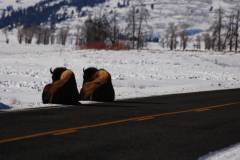
RoadWarmth

Keeping warm on the road

This is a typical story- people (mostly men) come here, they fall in love with the place, and they never leave. I heard it over and over again during the week from a former Silicon Valley executive to a successful Washington contractor, and many others. Their stories were wistful, told with sighs and slight smiles as if they had fallen into the arms of a dream and had never woken up. It is the open space, the thrill of seeing thousands of elk migrate in fall, the wildness of it all they love.

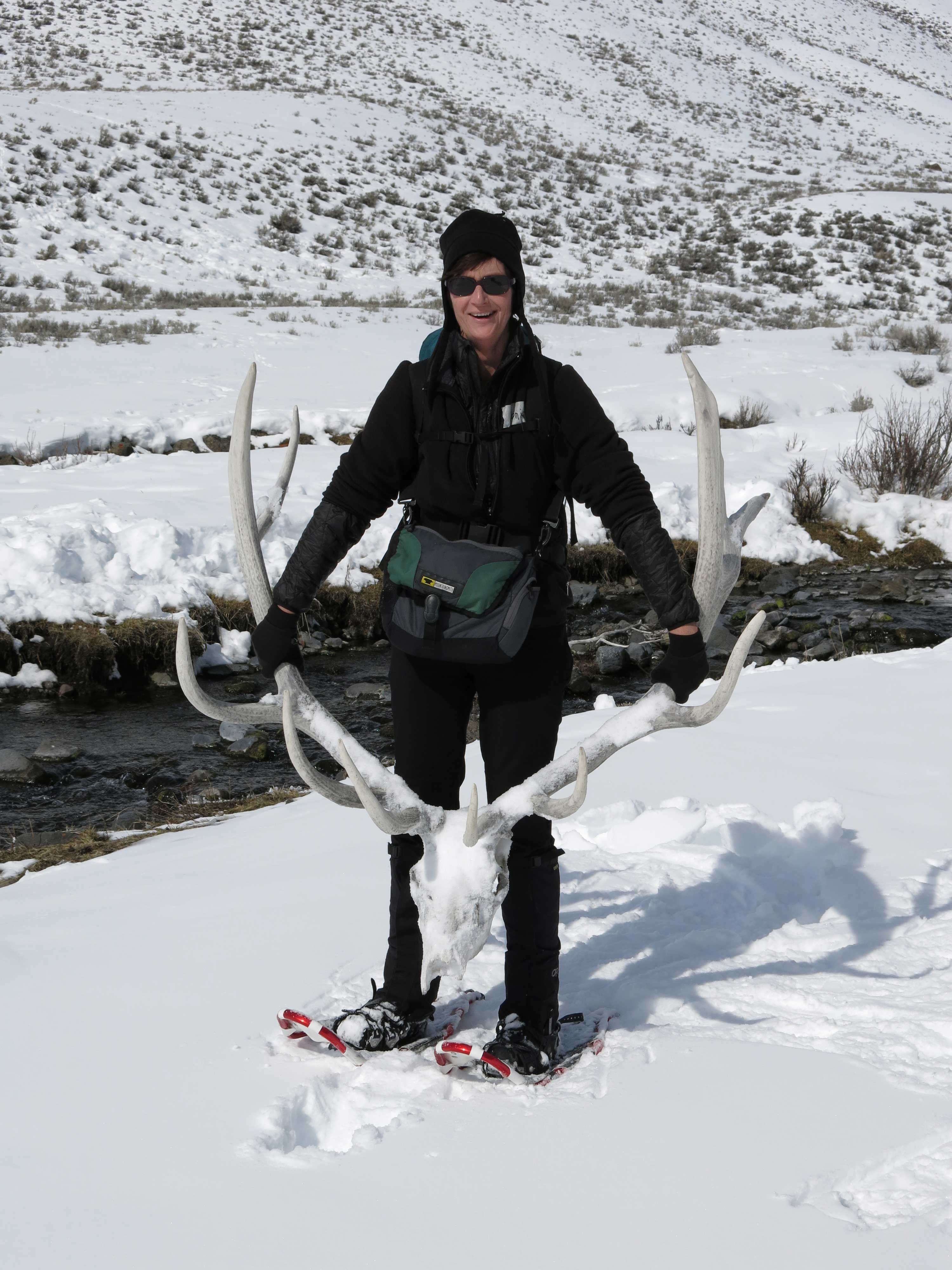
The second day, we signed up for the Specimen Ridge hike. I begged off wearing snowshoes, much to John’s relief. The snow didn’t require bulky, awkward snowshoes and they were only wearing them because attendees wanted to try snowshoeing. Perhaps because my hips have never been structurally or functionally ideal, I do not enjoy the wide stance required by snowshoes and only wear them when I must. An older gentleman (yes, older than I) from North Carolina came along and set the pace much slower than we would have liked. Snow fell the entire time, making a Christmas atmosphere.Antlers

I got a chance to talk Don MacDougall, shown in this picture standing on an overlook above the Yellowstone River. Don works during the summer months at Pack Creek brown bear sanctuary on Admiralty Island in southeast Alaska. He has more bear experience than most, since the rangers manage permit-holding visitors crossing a mile of bear-dense territory to watch bears fish for salmon in streams. He rues the requirement to carry a 308 to deal with the bears, because good bear sense, without even use of pepper spray, is what has kept him safe. He has been within 10 feet of a grizzly (they’re called “brown bears” in Alaska). We talk about Timothy Treadwell (“Grizzly Man”), the flamboyant and unpredictable would-be actor and film maker who spent too many years too close to bears and finally got himself and his girlfriend eaten. Don cites Tim’s worst offense as having dragged his fearful girlfriend into his fantasy of being at one with grizzlies, which he named silly things like “Mr. Bobo”.

Don coaches me on proper use of pepper spray: use it, then make sure you step out of the way, because the bear will keep coming even through the cloud of spray and you don’t want to be in front of it. Practice with your spray from last year when it expires. Don’t run, don’t scream, and don’t stare.

Our group includes the instructors who don’t want to stroll the flats with the rest of the group. We are more die-hard (“aggressive” as one woman put it) than many, and want to stretch our legs in the afternoon. None of these hikes are difficult, but since the demographic attending these classes is generally older and from lower elevations, they are listed as moderate.

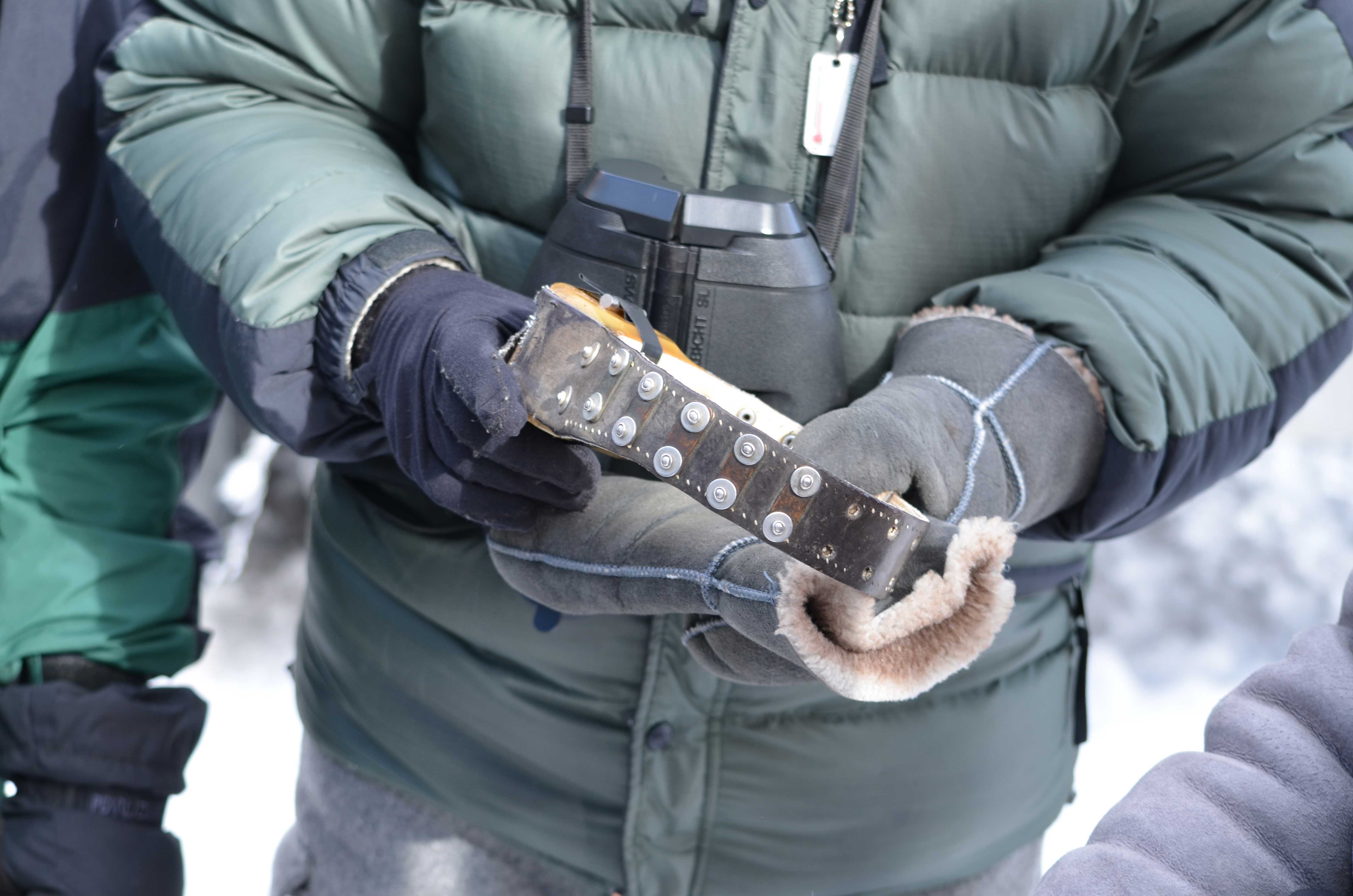
The third day was the most exciting. The instructors are always in contact with the Wolf Project, an arm of the Park Service. The Project is struggling to get their winter radio collar operation completed after a run of poor weather for flying the plane and helicopter needed for collaring. They collared two sub-alpha status wolves in the Junction Butte pack in fall, only to have the wolves disperse from the pack. They ask us to watch for the animals and radio them if we see them.WolfCollar
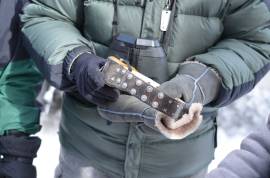
We travel to the Hellroaring Creek overlook in the “Little America” area of the Lamar Valley and Brenda, a Park volunteer and skilled spotter, saw the pack about a mile away across the open expanse.

IMG_0157_edited-1

The kill, with wolves and ravens

We called the Wolf Project ranger who is an eternal presence everywhere, Rick McIntyre, and reported the wolves were clearly hunting, harassing bison (one with a broken leg). The Wolf Project began mobilizing for a potential collaring operation when the pack ran an elk out of the small trees and rocky outcrops and killed it, ensuring the pack would be in the area for awhile. We excitedly chased the wolves with spotting scopes, taking fuzzy pictures through the scope due to heat waves.IMG_0160_edited-1
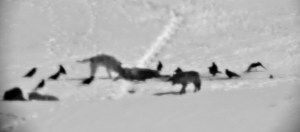
The wolves gorged themselves- as animals that eat only every few days, they have adapted with a stomach that can expand to hold up to 20 pounds of meat (for an animal ranging from 80-120 pounds). In contrast, an 800-pound grizzly that eats a variety of food all day long can only consume about 12 pounds of meat. Once gorged, they lay “meat drunk” to digest, only getting up to defend the carcass from coyotes and feed once again.

During this time, the Wolf Project got the Piper Super Cub plane and helicopter going. Rick, Matt Metz, and other Wolf Project staff gathered at the overlook. Rick told us what would happen: Doug Smith, head of the project, would be strapped in the opening of the helicopter where the passenger side door was removed, his feet braced on the sled, and they would maneuver around the wolf until they could get a dart with an immobilizing agent called telazol into the wolf. They wanted three wolves, but would be happy with two. Alpha male and female were best options, but they would go for others.

During a really exciting chase where we struggled to keep up with the helicopter using spotting scopes, they chased the alphas, which eluded them by dodging into and through the trees where the helicopter couldn’t maneuver. In the end, they darted two lower status wolves. Once the wolves were down, they picked up one and put it with the second, stuffing them in the snow to help cool them off after the chase. The helicopter went to get more staff to help weigh, get blood samples, do physical exams, and collar.

We had found ourselves standing out there for five hours, transfixed, breathless. It was a long day, but really, really cool.

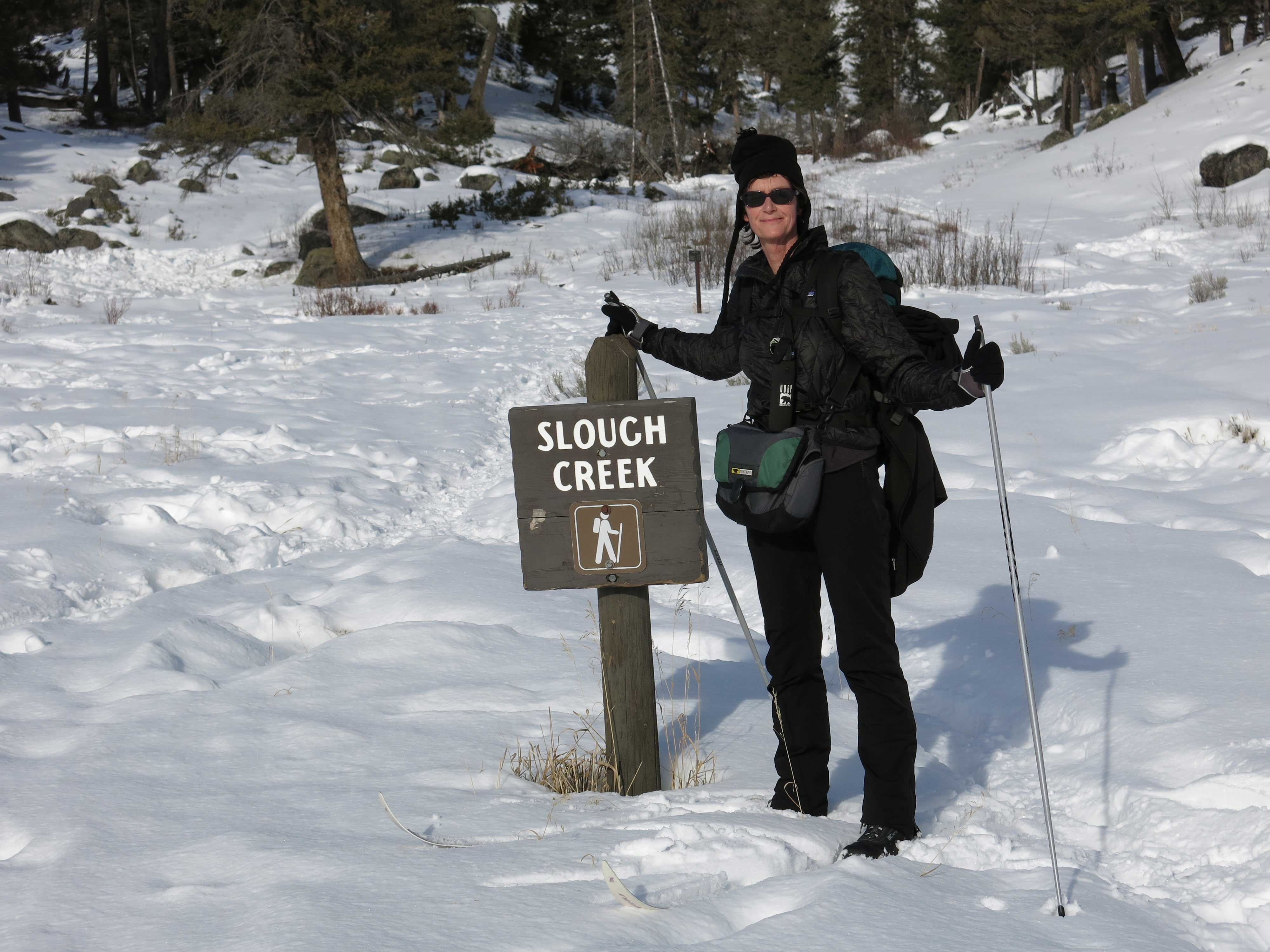
SkiSloughCreekLater, we skied to Slough Creek, the backpacking destination I had found for last September’s trip to Yellowstone, my first. The snow was gentle, the bison rumbling low as we passed, a coyote loping quietly by as we moved along. This looks like a wonderful snow camping destination, probably best in March despite the storms because it’s before the first grizzlies emerge from their dens.BighornSloughCreek

On my last day in Yellowstone, after the class was over, I went skiing- first to Tower Junction, then up the road from Canyon to Norris, stopping at a view of Bunsen Peak. The snow turned sticky in the sun, but it was still a nice day with beautiful views.
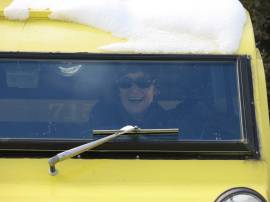
Co-opting a snowcoach used to haul people over Tower Junction Road

Co-opting a snowcoach used to haul people over Tower Junction Road

So what’s next? Well, for me I am slowly being wound into that same love affair with the Yellowstone area, fueled by a long fondness for open space and wildlife. I will return in September to backpack the Heart Lake loop. In October, I will take Certified Interpretive Guide training. And then-?


This slideshow requires JavaScript.

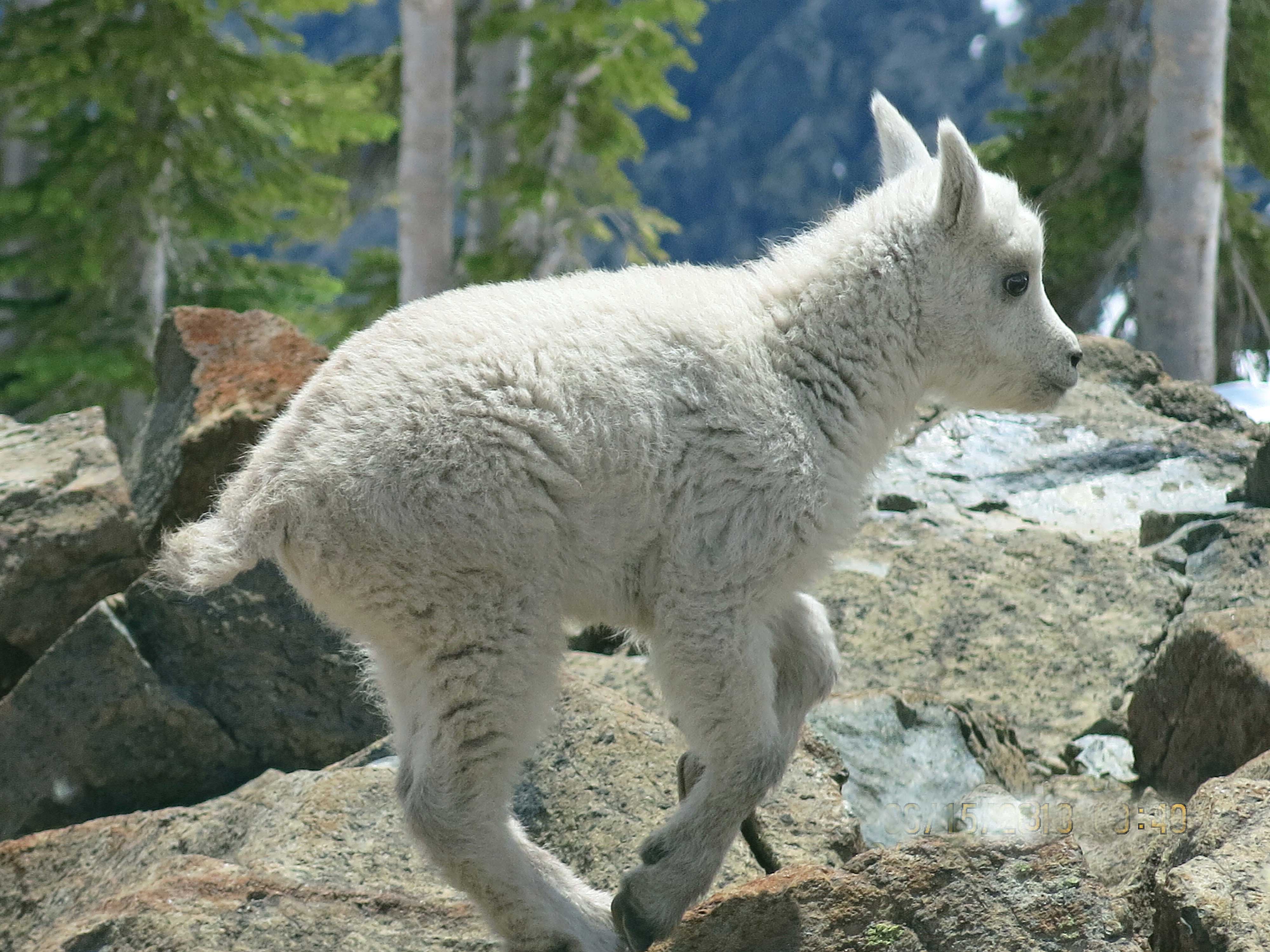
Mountain goat and baby, Ingalls Pass, copyright Monica Van der Vieren

Remember, fellow hikers~ a fed goat is a dead goat. While these mountain goats and their eight compadres were highly entertaining, they had clearly been fed or allowed to lick people for the salt in sweat. Ignore them as they patrol for your lunch and let them avoid getting in trouble that will inevitably get them “removed” by the services.

So would the Forest Service be mad if I posted a giant sign at the trailhead saying, “A FED GOAT IS A DEAD GOAT”? There is a sign at the trailhead warning people about dangerous goats with their lethal pointy horns, but no sign posted saying why the goats have gotten so aggressive. That would be us, my friends. More on goats later.
We decided to try Lake Ingalls on a day with promise of views of Mt. Stuart. In all the time I’ve been here, I’ve seen Stuart, and been up it on a clear day, but every time I’ve brought someone else, it’s been cloudy at the top. Not so today.
The parking lot was very full, but surprisingly, there were few people on the Lake Ingalls trail. Perhaps most were headed for Esmeralda Basin. The hike up was easy most of the way, crossing softening avalanche fans a couple miles up. There is a profusion of spring beauty flowers and some glacier lilies, meaning the real flower show is yet to come. It was a perfect day temperature wise, with a light wind to keep us cool.

Past the intersection with Longs Pass, the trail cuts into a basin that was snow covered for the most part. We picked our way up and stopped for views, only to have a goat leap past us and then circle around to a rocky outcrop. Two guys had just come down over the rocks, and three folks were on their way up, so we figured they had spooked the goat.

Then we got up to the camp area below the pass and there was an adolescent goat checking out four unoccupied tents. Another adult was wandering the snowfields. We proceeded up to the pass on snow to the area where people like to picnic and decided to stop and enjoy the highly unusual solitude and lovely views of Mt. Stuart and the basin.

Drop that granola bar!Suddenly, we saw a herd of 10 goats start up from Headlight Basin toward our locale. We were thrilled as they formed a line and ascended the slopes – and surprised as they came over the rocks toward us- and then we were scrambling to pick up our lunch as they streamed over the ridge right past us, pinning us to the edge. Two woolly babies bleated in protest throughout the promenade past us, but their mothers looked pretty determined to make us drop our granola bars.

Yes, they're cute, but their mamas have giant horns.

Yes, they’re cute, but their mamas have giant horns.

The goats made patrols and passes for over an hour, sometimes hovering on the rocks above. Clearly, they associate people with food. I have never seen this behavior, but after reading the warning from the Park Service about NOT LETTING THE GOATS LICK PEOPLE’S HANDS AND ARMS at Mt. Ellinor, I figured these goats had been corrupted like the red foxes at Mt. Rainier that get too many balogna sandwiches and then get smashed on the road hanging out for more handouts. We ignored the goats and they eventually dispersed, leaving us to rest in the sun and enjoy a light nap until- BAAA! There was a goat baby and mom right above us. Yikes. We watched some scramblers coming down the gully between South and North Ingalls peaks and finally shook ourselves out of our pleasant little spot, which not another person had visited in over two hours.

 So Ingalls Pass  is an excellent place to see mountains and  mountain goats, but please please please don’t feed them or let them lick your arms. Wildlife always pays the price for human indulgence in the end.